
The Last 10%: Why Finishing a Room Is Its Own Skill
You walk into a room and everything is technically right. The paint, the furniture, the floors, all of it, exactly as it should be. And the room still just sits there. Flat. A little like it is holding its breath. It is almost there, and it is not alive yet.
People ask me about the big decisions all the time. The kitchen, the tile, the built-ins, the bones. And those matter, they really do. What I keep coming back to after all these years is the last 10%. The final layer. The work that goes in after the dust settles and the big pieces land, when a house is technically finished and has not started breathing yet. That layer is a skill of its own, and most people stop short of it.
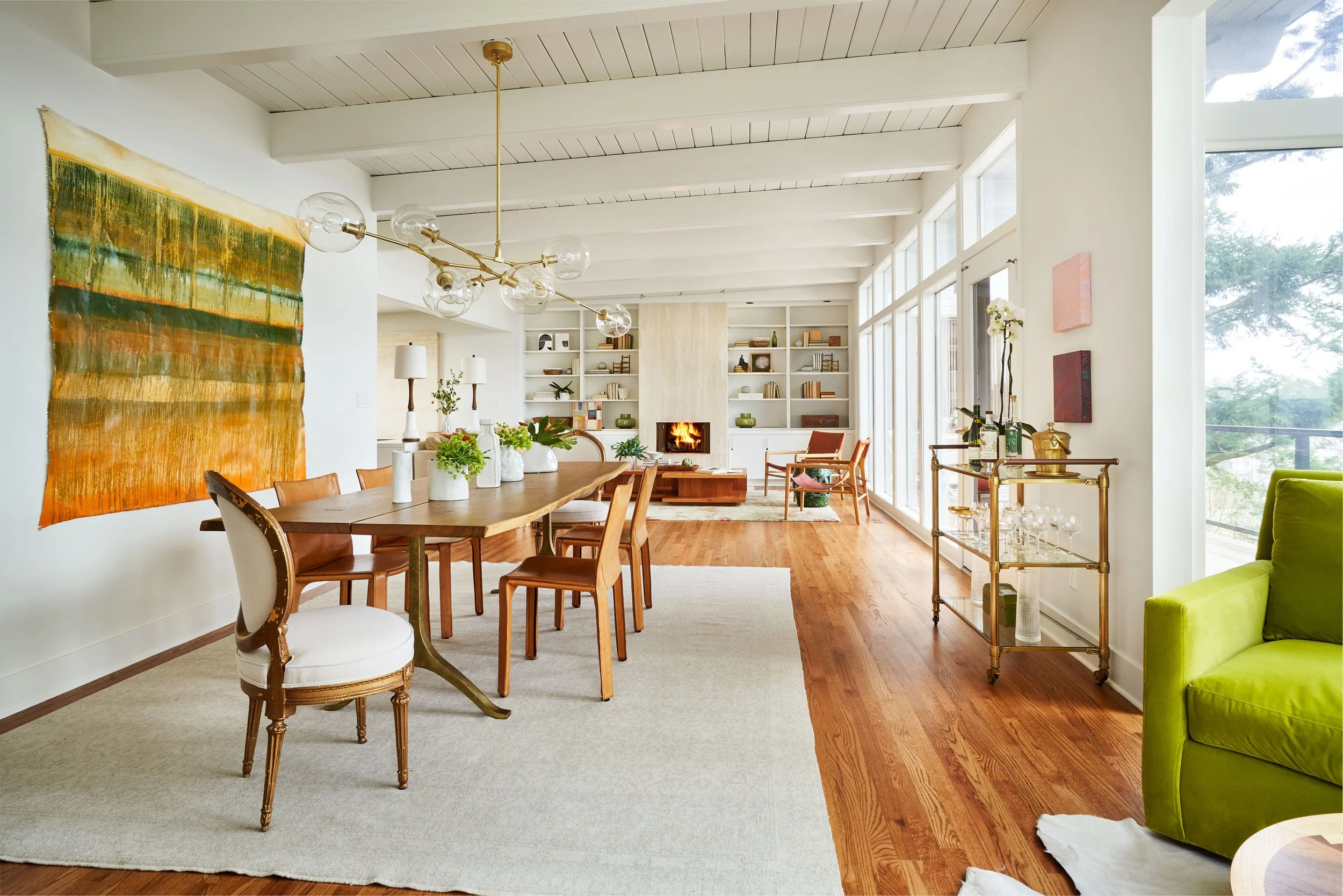
The Last Thing In Is the First Thing You Notice
When I walk into a room that is almost there, the two words that come up first are layer and texture. They are pretty much inextricable, honestly. The layering of art. Books stacked on a shelf. Blankets and pillows, the little tchotchkes, a collection you have been adding to for years without really noticing. It is the last thing that goes into a room and the very first thing anyone notices.
That layer is where you show who you actually are. It is the stuff that gets moved around constantly, the stuff that reflects your moods and your travels and whatever season of life you happen to be in. Your kid's artwork. The little thing on the windowsill that means absolutely nothing to anybody else and everything to you. The cherry on top, even though it lands last.
It is also why a hotel feels like a hotel. There is no soul in a space like that, and there is a reason for it. Everybody passes through, so it stays flat on purpose. Your home should be the opposite of a hotel.
Why Rooms Stall Right Before the Finish
I see rooms stall out at almost-done all the time, and it is rarely about money or taste. It is the “shoulds”.
People take in too much. The internet, well-meaning friends, whatever is supposedly correct this year. And they freeze. They are not sure what to put out, so they put out nothing, or they put out something so safe it has no fingerprints on it. The room reads flat because there is no actual person in it.
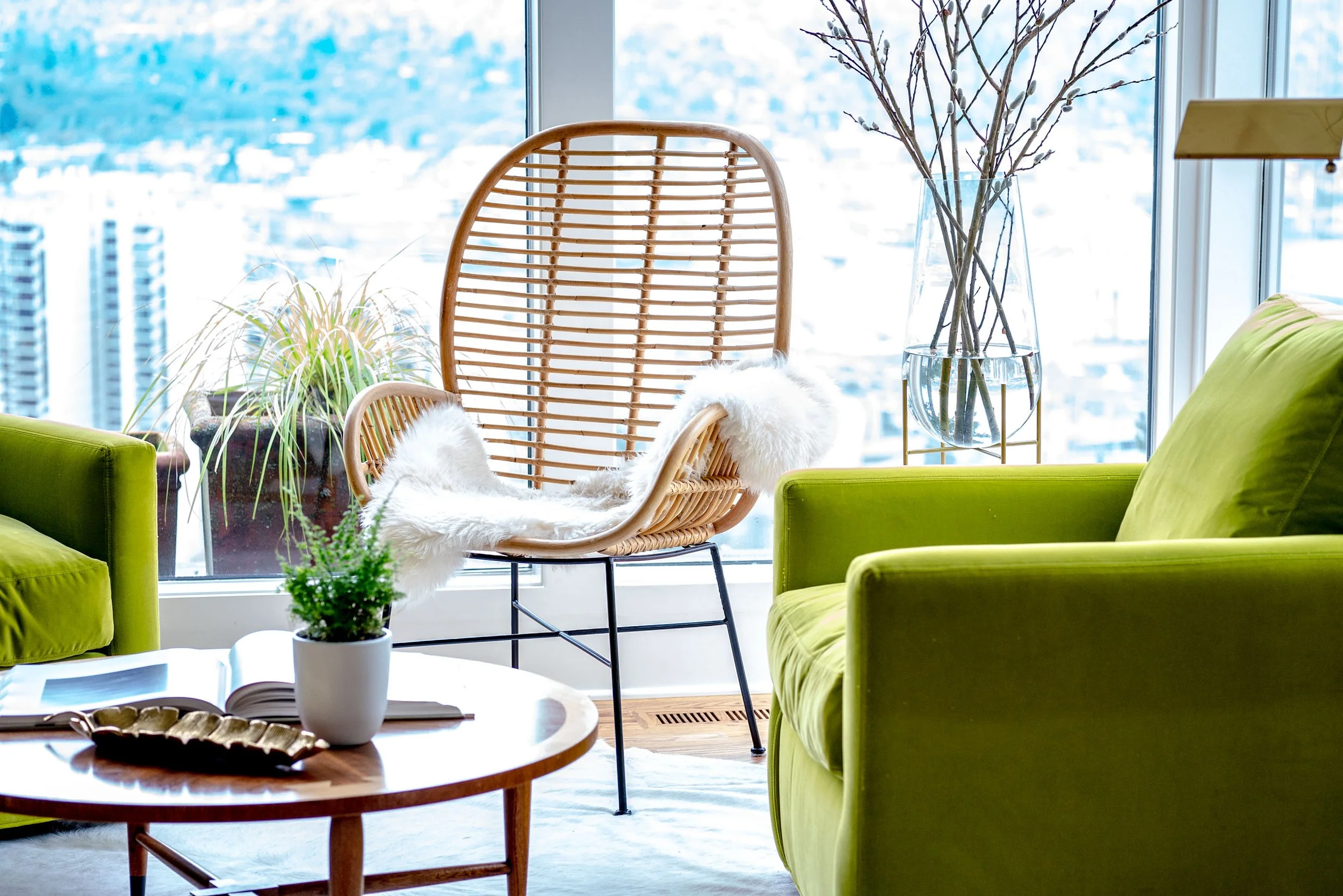
The homes that feel alive belong to the people who quit worrying about all of that. They bring in the whimsy. They put the weird, wonderful, story-heavy thing on the shelf, and when you ask about it they light up and tell you exactly where it came from. That is the moment the energy in a room shifts. And it stays shifted, because the intent is baked in. They loved that thing the day they set it down, and it just keeps reverberating.
Which is why big box store art does nothing for a room. Pretty color, nice frame, fills the wall just fine, and has no story in it. I hate the shoulds. People need to knock off the shoulds.
A Room That Finally Exhaled
We did a casita for a couple of our all time fave clients of ours, Dave and Karen. Paul Marto did the build, and we turned it completely around, from a dark, heavily wood-clad room into something light and bright with a whole new function.
They did not have much of their own to bring in, so we supplemented from our shop. Vintage lamps, vintage objects, a few things with some travel on them, going for that Italianate, well-traveled feeling they love. We found a pair of vintage leather chairs at Chairish, already beat up, already carrying some patina, specifically so the room would say go ahead and live here. Leave a ring on the table. This place is for living, not for being looked at from the doorway.
A month or two later Karen texted me. Just a photo, her feet up on the ottoman, her grandkid playing, an air hockey table we had to design the entire room around. She was so happy. We had layered in the things that gave it soul and left room on the shelves for her to keep adding her own. The art had stories, so now she gets to pass those stories on to whoever asks about them. You cannot manufacture that.
The Room is Never Done
The room is never done. It is just never done, and I mean that as a relief, not a chore. If you see something you love, you will find a place for it. Maybe not the living room. It might end up in the mudroom, for heaven's sake, or as some tiny thing on a windowsill, a shell you picked up on a beach years ago. Stop treating done like a line you cross once and never touch again. The good homes just keep gathering.
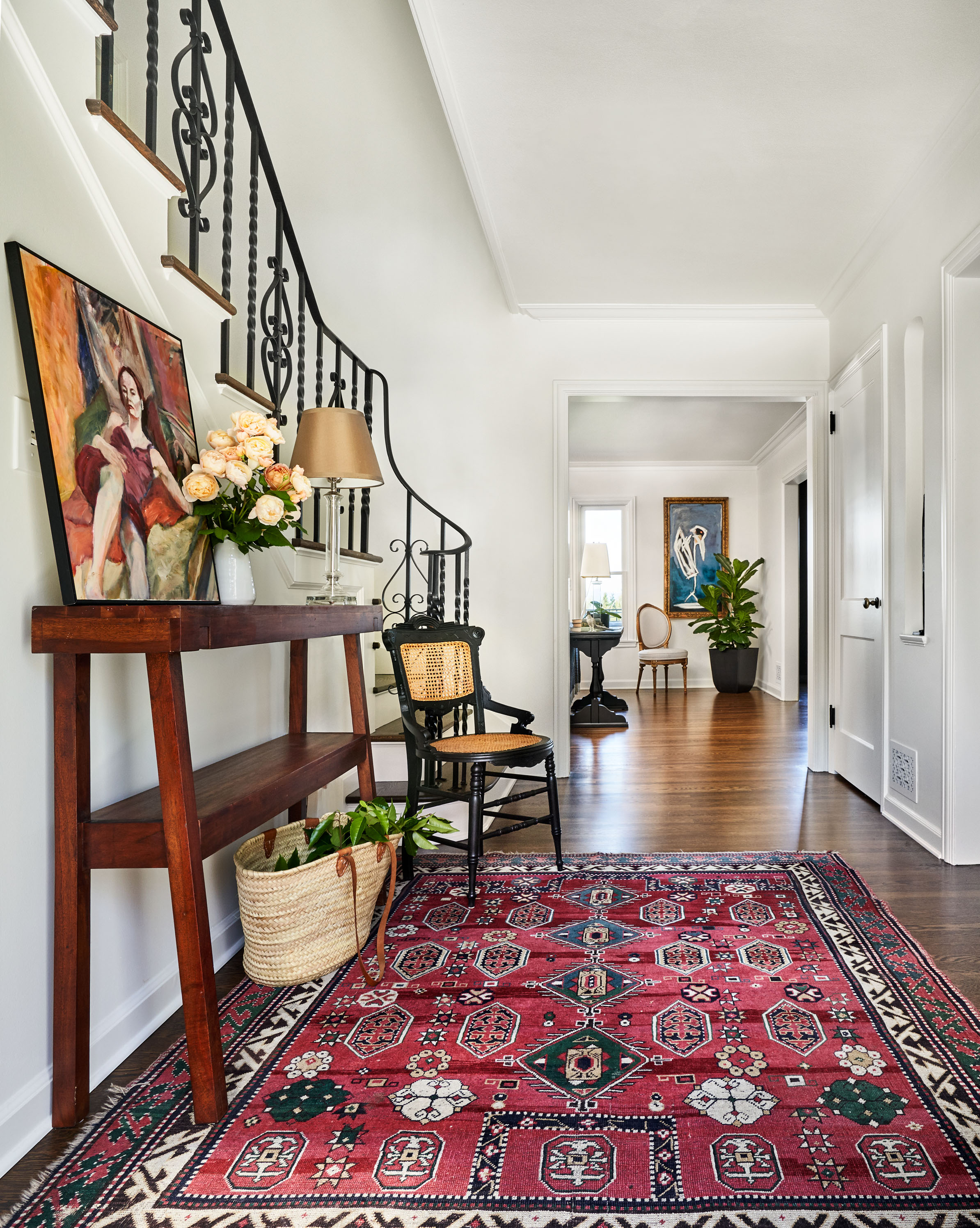
Not everything can be the belle of the ball. Some pieces have to be the supporting cast, and that is not a demotion. It is what allows the room to have rhythm. If the rug has a strong pattern, the larger upholstered pieces may need a different kind of strength, perhaps a block of color, a quieter texture, or a scale that does not compete.
Then the art, pillows, lamps, and smaller textiles can pull color from the rug and move it around the room. They can echo something in it, contrast with it, or soften it, depending on what the room needs.
Some of that is skill, some of it is technique learned over time, and some of it is instinct. You can often feel when something is wrong before you can fully explain why. The scale is off. The color is pulling your eye in the wrong direction. The room feels visually hectic instead of alive. That instinct is worth listening to, because good design is not only about rules. It is also about sensitivity.
Not everything can be the belle of the ball. Some pieces have to be the supporting cast, and that is not a demotion. It is what allows the room to have rhythm. If the rug has a strong pattern, the larger upholstered pieces may need a different kind of strength, perhaps a block of color, a quieter texture, or a scale that does not compete. Then the art, pillows, lamps, and smaller textiles can pull color from the rug and move it around the room. They can echo something in it, contrast with it, or soften it, depending on what the room needs.
Some of that is skill, some of it is technique learned over time, and some of it is instinct. You can often feel when something is wrong before you can fully explain why.
The scale is off. The color is pulling your eye in the wrong direction. The room feels visually hectic instead of alive. That instinct is worth listening to, because good design is not only about rules. It is also about sensitivity.
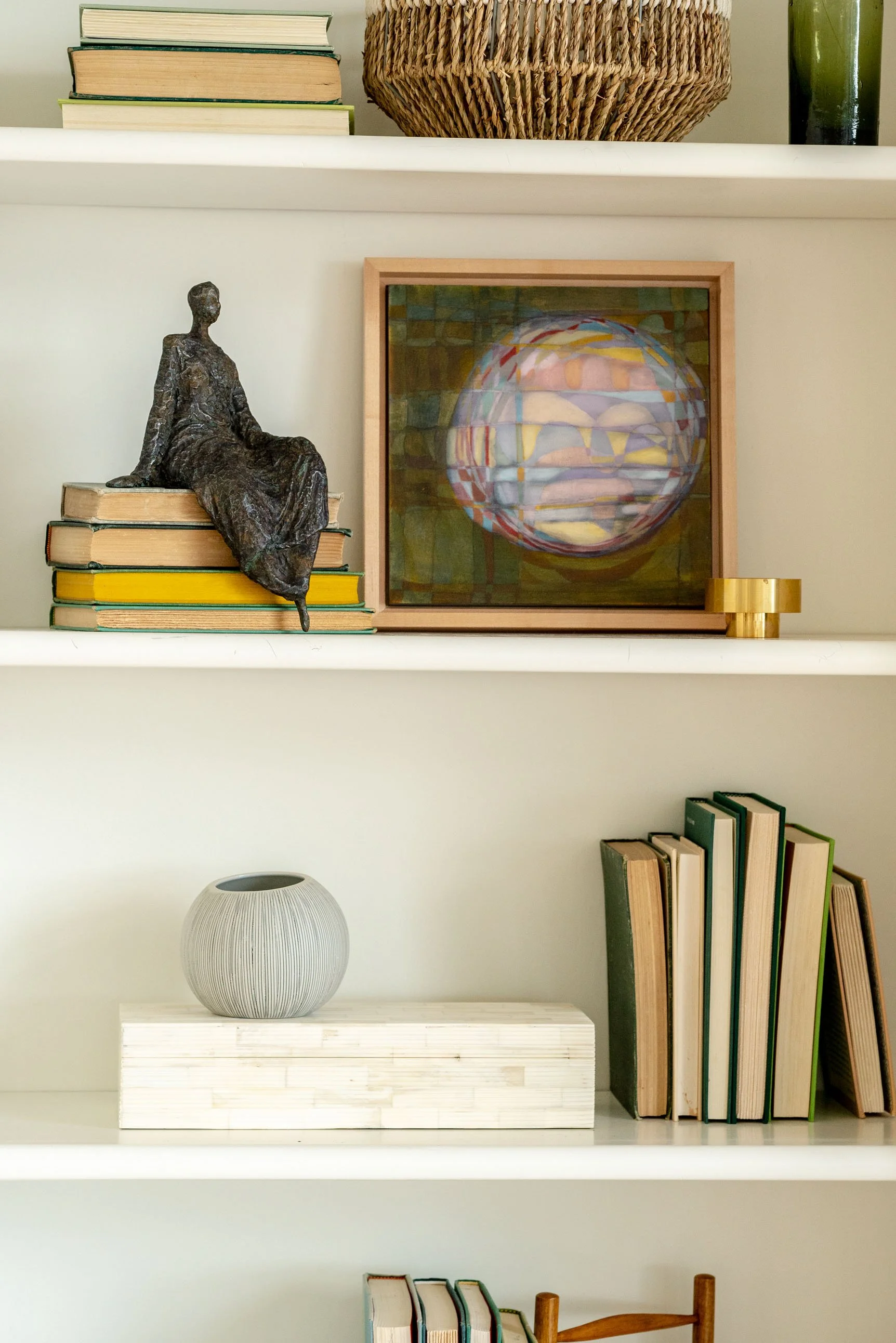
How I Know What’s Missing
People ask how I know what a room still needs, and after this long it really is mostly instinct. But if I had to put words to it, the thing I am chasing is depth. Depth of field. A little bit of a human hand.
I am always playing off of what is already there. If there is a polished mirror and a glass lamp on the table, the next thing in cannot be yet another shiny, perfect object. It needs to be wood, or woven, or a handmade ceramic with somebody's thumbprint still in it. Something with a pulse to it.
This is why I am such a sucker for tramp art. So handmade, so much depth to it, and I have loved it forever without totally knowing why. I was over at my friend/client’s Peggy's a couple weeks ago, helping with her mantle. She had done most of it herself, a stack of books, a couple candlesticks, a piece of art, and she knew she was close. It was just missing texture. I went into her stash, pulled the most perfect tramp art mirror, and leaned it against the mirror she already had up there, a simple little fix. She came around the corner and went, wait, did you bring that? Nope. She already owned it.
A mirror layered on a mirror. It is a little weird, and a little against the rules (which is usually a good sign). It goes against every “should” there is, and that is exactly why it works.
Scale Is A Feeling
Scale is something you feel before you can explain it. You carry a piece into a room, hold it up, and you just see it. It’s dwarfed. Or, every once in a while, it’s too big (that one is rarer, but it happens). Your head tilts to one side and you think, something is off in here.
Too small you can usually fix. Pair it with something. Stack a few books and set the lamp on top of those. Lean art against a mirror so it reads bigger than it is. The mistake I see constantly is art hung way too high, floating up near the ceiling, afraid of the couch. Bring it down to where people actually live. Eye level. We want to appreciate it, not strain to see it!
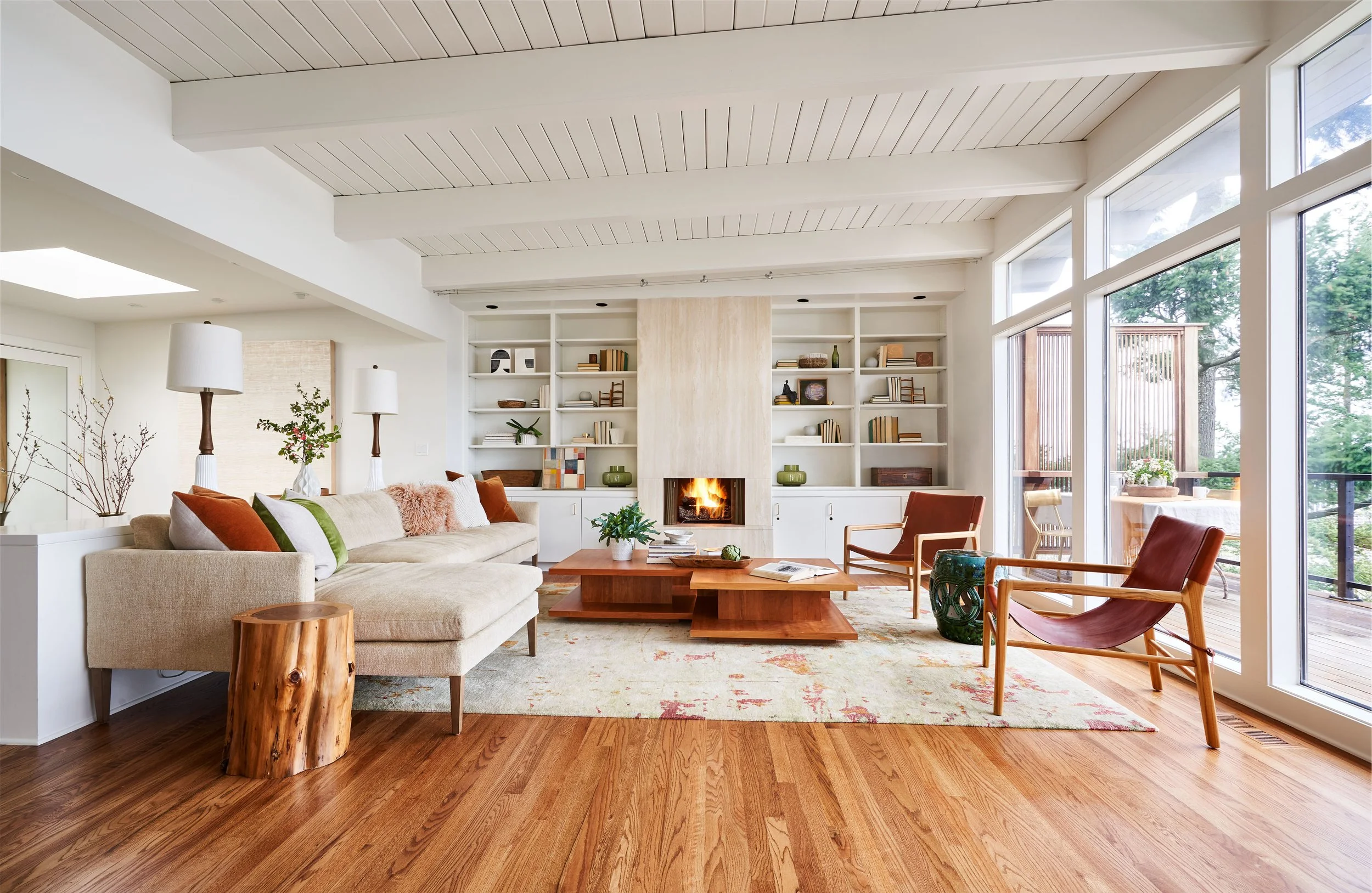
The Room That Talks To You
Usually right off the entry, the room you see the second you walk in. People decide it is the important one, the one that deserves a fortune, and then, because it feels like it should cost a fortune, they never do a thing with it. So it sits there empty. And every time they pass it, every time they have people over, they are quietly apologizing for it.
Do not let a room do that to you. Fill it. Put a pool table in there if that is what makes you happy. It does not have to be expensive, and it certainly does not have to be precious. I would so much rather you drag a beautiful rug in there and sit on the floor with a glass of wine and a head full of plans than leave it empty and let it talk to you like you let it down.
Budget For The Last 10%
The final layer is every bit as important as everything that came before it. It deserves room in the budget and the same care you gave the kitchen. Leave yourself something to shop with, for the art, the antiques, the window treatments, after you have layered in the pieces you already own and love.
Skip the finishing work and a house can be genuinely beautiful and still feel stale, like you only just moved in. I have walked into homes around Portland that were remodeled ten years ago and still feel exactly that way, stuck at almost-there. Living on the edge of incomplete is a quietly unsettling way to live, and most people do not even clock that that is what they are feeling. A finished room should do the opposite. It should beckon you to sit and stay a while.
So move in. Settle in. Show who you are. You deserve it.
This finishing work, the styling, the sourcing, the long hunt for the one right piece, is hands down my favorite part of all of this, and it is the part I want to be doing more of with people. A whole home or one stubborn shelf that will not behave, it does not matter to me. If your house is sitting at 90% and you cannot figure out why it still feels flat, that last 10% is exactly where I love to come in.