
The Rug That Tells the Room What to Say
A great rug is never just the thing underfoot. It is one of the pieces in a room that can quietly determine how everything else begins to speak. It gives the furniture somewhere to belong, helps color move through the space, changes the way a room sounds, and alters how the room feels beneath your feet. In the best rooms, a rug is not simply an accessory added at the end. It is often the piece that helps the whole room understand itself.
Sometimes we begin with the rug and build the room around it. Other times, the furniture, art, and palette are already in place, and the rug comes in later as the missing piece that pulls everything together. Either way, the rug is rarely secondary. It becomes the anchor. It is what makes the room congeal, visually and physically, so the pieces no longer feel like separate objects sitting near each other. They begin to feel connected.
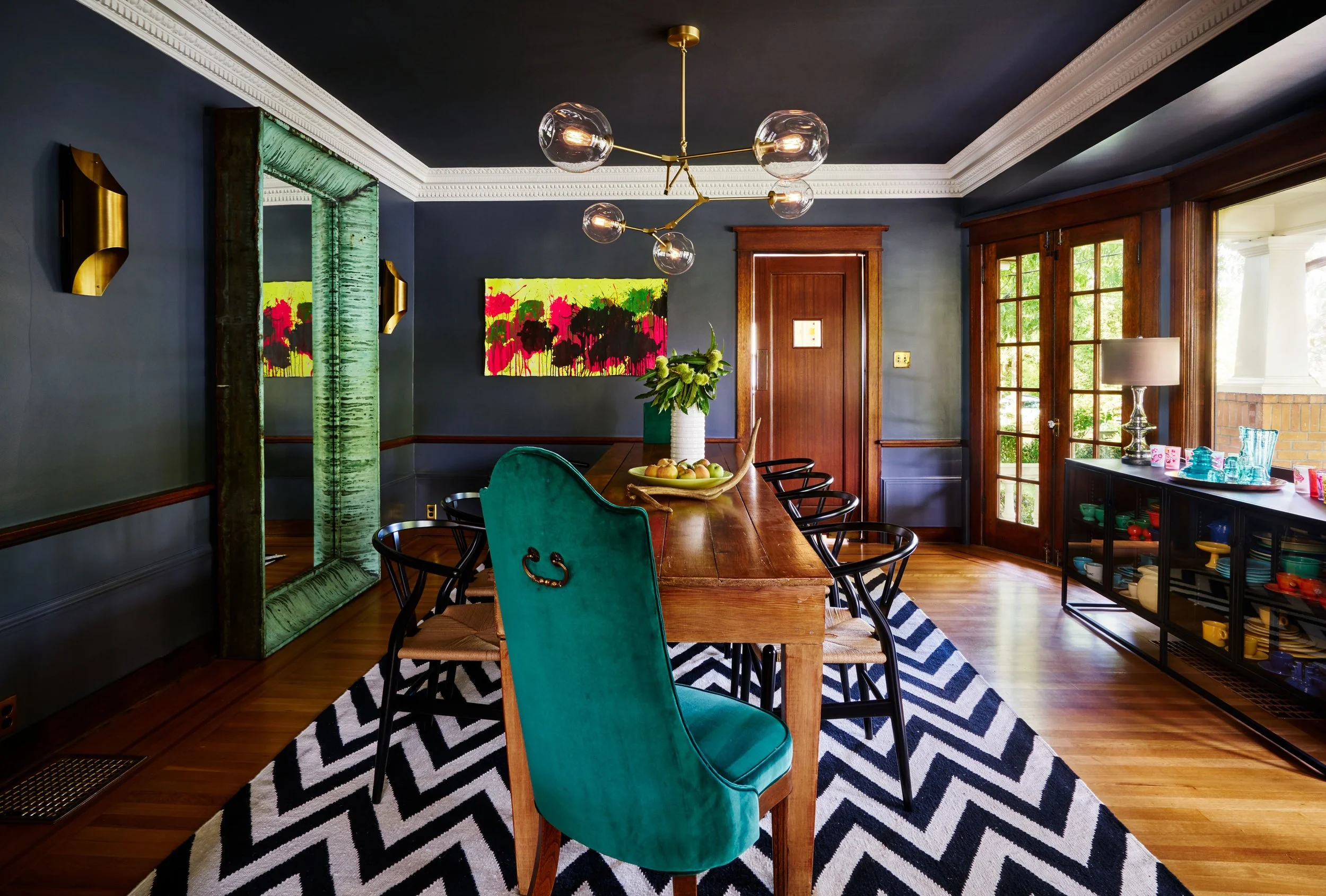
In Frame: Irvington Prairie Style Reimagined
Rugs Are More Than Color Underfoot
That is what makes rugs such powerful design objects. They are color, of course, but they are also scale, texture, fiber, light, sound, and feeling. A rug made with natural fibers will behave differently throughout the day than something flat and synthetic. Wool, silk, age, weave, dye, and texture all shift the way a rug lives in a space. How it catches the light, how it softens footsteps, how it absorbs sound in an echoey room, how it changes the comfort of sitting or walking through a space; all of that becomes part of the design.
This is also why seeing a rug in person, and ideally seeing it in the actual room, matters so much. You can look at a rug in a showroom or online and think you know what it will do, but a room has its own light, its own architecture, its own atmosphere. A rug that seemed quiet somewhere else may become too bright once it is home. Something with silk fibers may catch the light in a way that suddenly makes it the loudest thing in the room. Another rug you were less sure about may be the one that settles everything into place.
That moment of seeing the rug unrolled in the room is irreplaceable. When my trusted local vendors like Christiane and Matt from Christiane Millinger Rugs bring rugs into a home, there is an immediate sense of truth to it. You can see how the rug relates to the furniture, the art, the wall color, the light, and the scale of the room. Other local sources, like Nomadic Vintage Rugs, offer that same invaluable experience: the opportunity to understand the rug not as an isolated object, but as part of a living space. That is very different from choosing from a photograph and hoping the texture, color, and quality translate.
When the Rug Changes the Room
One of the reasons I love working with strong rugs is that they can change the entire direction of a room in the best possible way. In one Portland primary bedroom, the design had been moving in one direction until the client saw a bright, colorful rug and loved it.
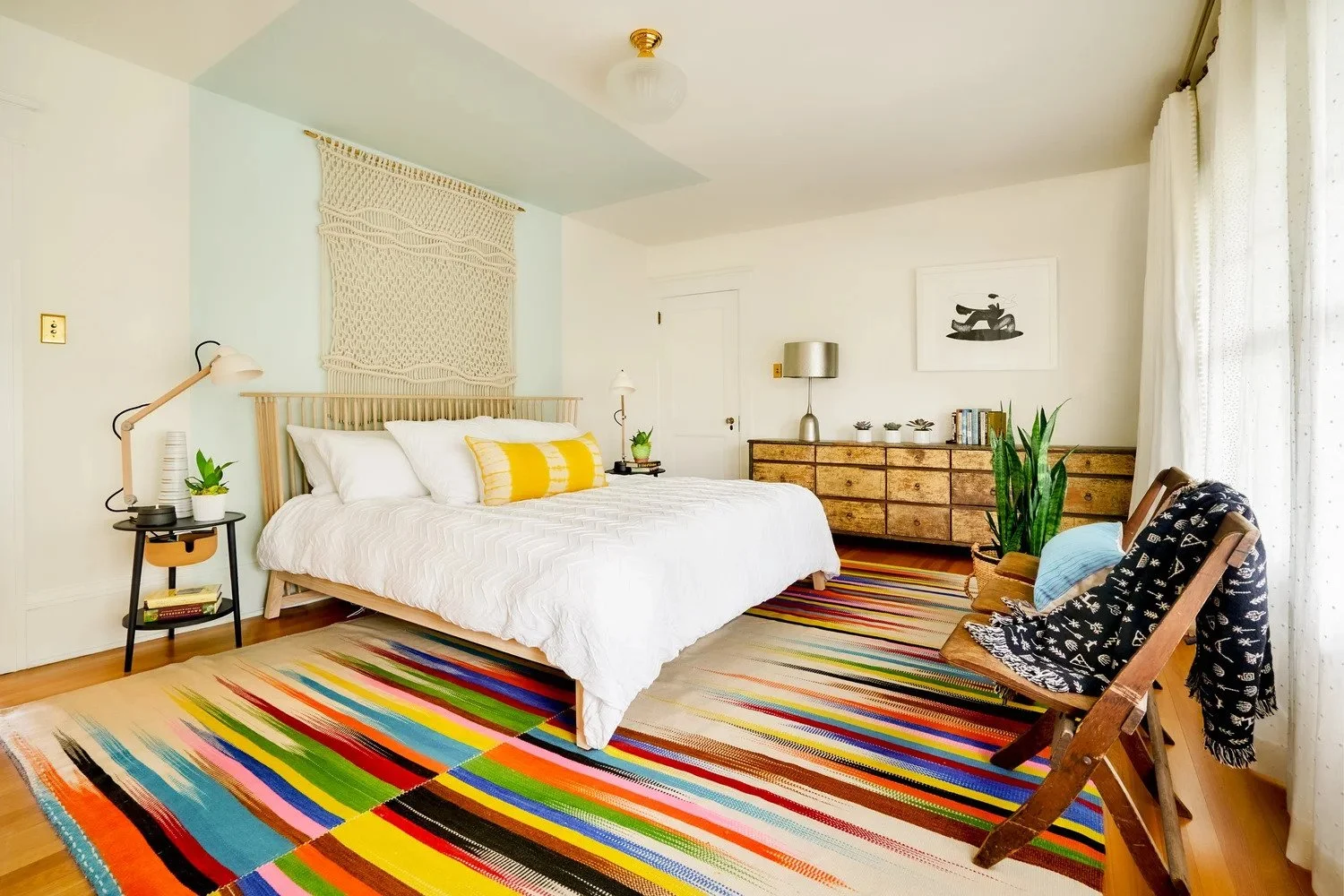
The room could have gone more traditional, and it still would have been beautiful, but this rug brought something else into the space. It brought energy, personality, and a sense of surprise that lifted the whole room.
Once that rug entered the conversation, the other decisions became clearer. The bedding could stay quieter. The furniture could support the rug rather than compete with it. The color did not need to be repeated everywhere, because the rug was already carrying so much of the feeling. That is what the right rug can do. It does not just finish a room. It can give the room its voice.
Rhythm, Not Matching
Of course, when a rug has a lot of personality, the rest of the room has to respond thoughtfully. That does not mean everything around it has to become beige and polite. I love pattern on pattern, I love color, and I love rooms that feel layered and collected over time. But there is a difference between a room that feels richly composed and a room where every single thing is trying to be the star.

In Frame: Irvington Prairie Style Reimagined
Not everything can be the belle of the ball. Some pieces have to be the supporting cast, and that is not a demotion. It is what allows the room to have rhythm. If the rug has a strong pattern, the larger upholstered pieces may need a different kind of strength, perhaps a block of color, a quieter texture, or a scale that does not compete.
Then the art, pillows, lamps, and smaller textiles can pull color from the rug and move it around the room. They can echo something in it, contrast with it, or soften it, depending on what the room needs.
Some of that is skill, some of it is technique learned over time, and some of it is instinct. You can often feel when something is wrong before you can fully explain why. The scale is off. The color is pulling your eye in the wrong direction. The room feels visually hectic instead of alive. That instinct is worth listening to, because good design is not only about rules. It is also about sensitivity.
Not everything can be the belle of the ball. Some pieces have to be the supporting cast, and that is not a demotion. It is what allows the room to have rhythm. If the rug has a strong pattern, the larger upholstered pieces may need a different kind of strength, perhaps a block of color, a quieter texture, or a scale that does not compete. Then the art, pillows, lamps, and smaller textiles can pull color from the rug and move it around the room. They can echo something in it, contrast with it, or soften it, depending on what the room needs.
Some of that is skill, some of it is technique learned over time, and some of it is instinct. You can often feel when something is wrong before you can fully explain why.
The scale is off. The color is pulling your eye in the wrong direction. The room feels visually hectic instead of alive. That instinct is worth listening to, because good design is not only about rules. It is also about sensitivity.
Starting Fearlessly, Then Editing
When mixing textiles from different periods, cultures, styles, and patterns, I think people often start too timidly. They want everything to match. They want everything to “go.” But perfect coordination is not the same thing as soul. In fact, that is often where rooms begin to feel flat. The chaos of perfectionism is that everything can technically work together and still not feel like you.
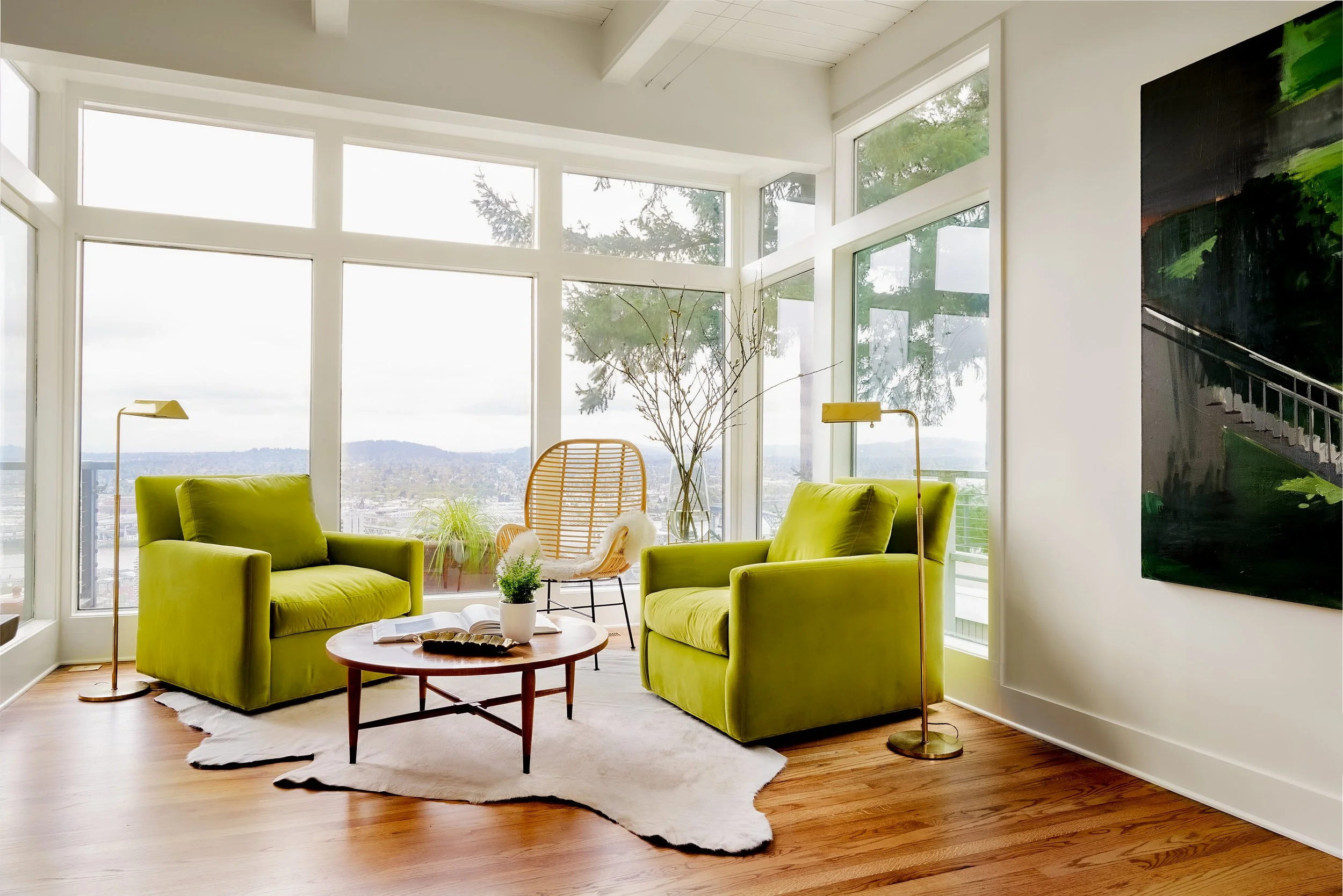
In Frame: Northwest Elegant Modern
My approach is to start fearlessly. Bring in the things you love. Put them in the room. Let them have a conversation. Then begin to edit. Maybe the bright green pillow is fabulous, but your eye goes straight to it every time and it distracts from everything else. Maybe a textile you love belongs somewhere else in the house. Maybe the rug is doing enough, and a few of the surrounding pieces need to become quieter. Editing is not about removing personality. It is about understanding hierarchy.
Why Handmade Rugs Are Worth Living With
That is also part of what makes a truly handmade, natural-fiber rug such a worthwhile investment. People sometimes worry that a beautiful rug will make them live too carefully, as if they have to tiptoe through the room or treat it like a museum. But that is not what these rugs are for. A well-made wool rug is meant to live with you. It can be cleaned. It can be repaired. It can age beautifully. The patina that develops over time is part of the story, not something to fear.
These are the rugs that become heirlooms. They are the rugs that can be passed through families, the ones that hold up because they were made with real materials, real craft, and real human hands. That human element matters. When you work with people who understand rugs, you are not just buying something pretty for the floor. You are learning where it came from, how it was made, what fibers were used, what dyes were used, and why those choices matter.
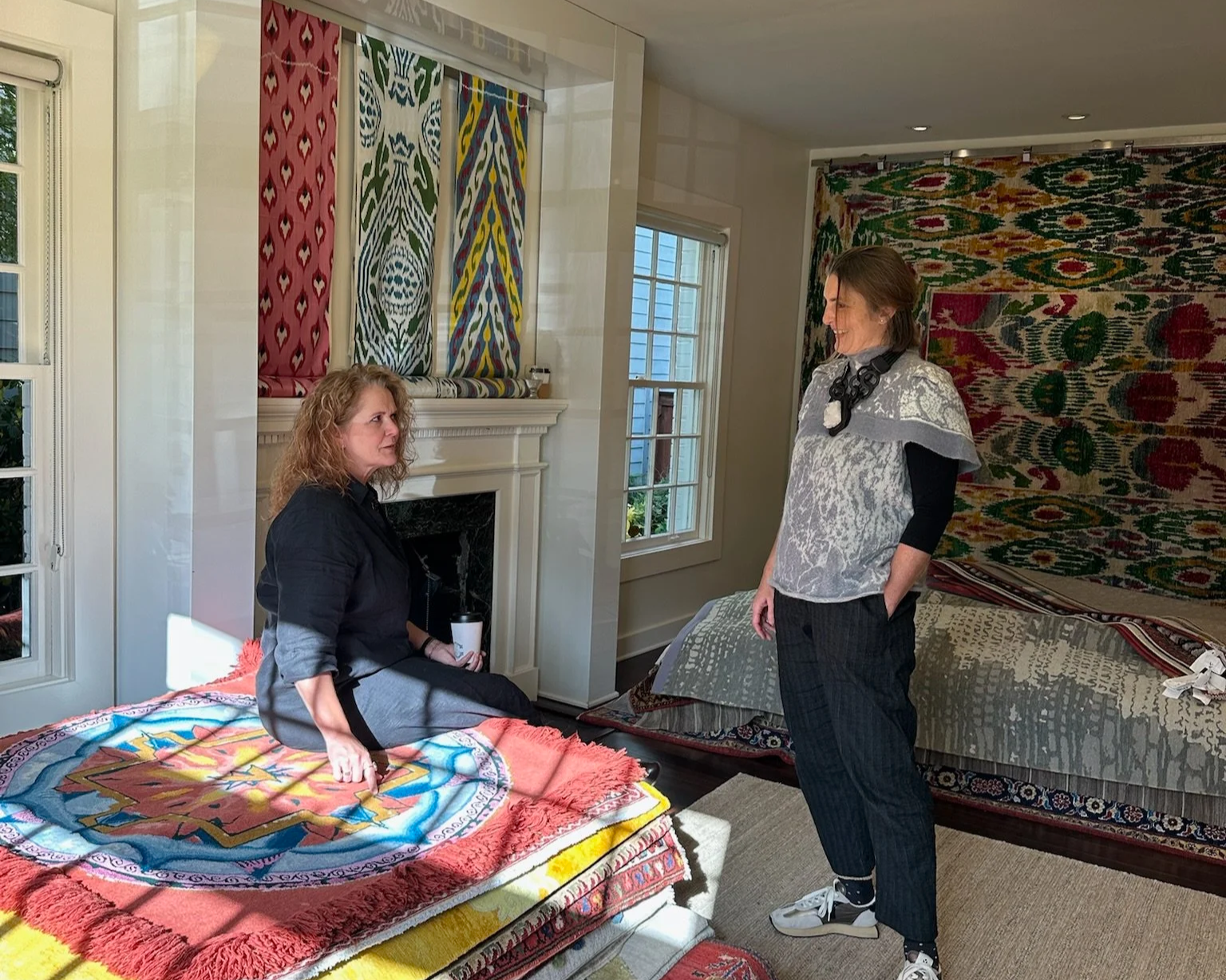
That is something I value deeply about working with people like Christiane Millinger. There is care around the object, not just a transaction. There are stories, resources, and a level of knowledge that continues long after the rug leaves the showroom. If something spills, if a pet has an accident, if the rug needs cleaning or mending, you have someone local who can point you in the right direction and remind you that the rug is not ruined. It is living in a house, as it should.
The Room Begins to Speak
A great rug brings more than color into a room. It brings history, texture, craft, mood, memory, weight, and softness. It can make new pieces feel collected and old pieces feel newly connected. It can ground an open plan, soften a formal room, or give a bedroom a completely different emotional register. It can be quiet or bold, traditional or unexpected, delicate or earthy, but whatever it is, it has to bring depth.
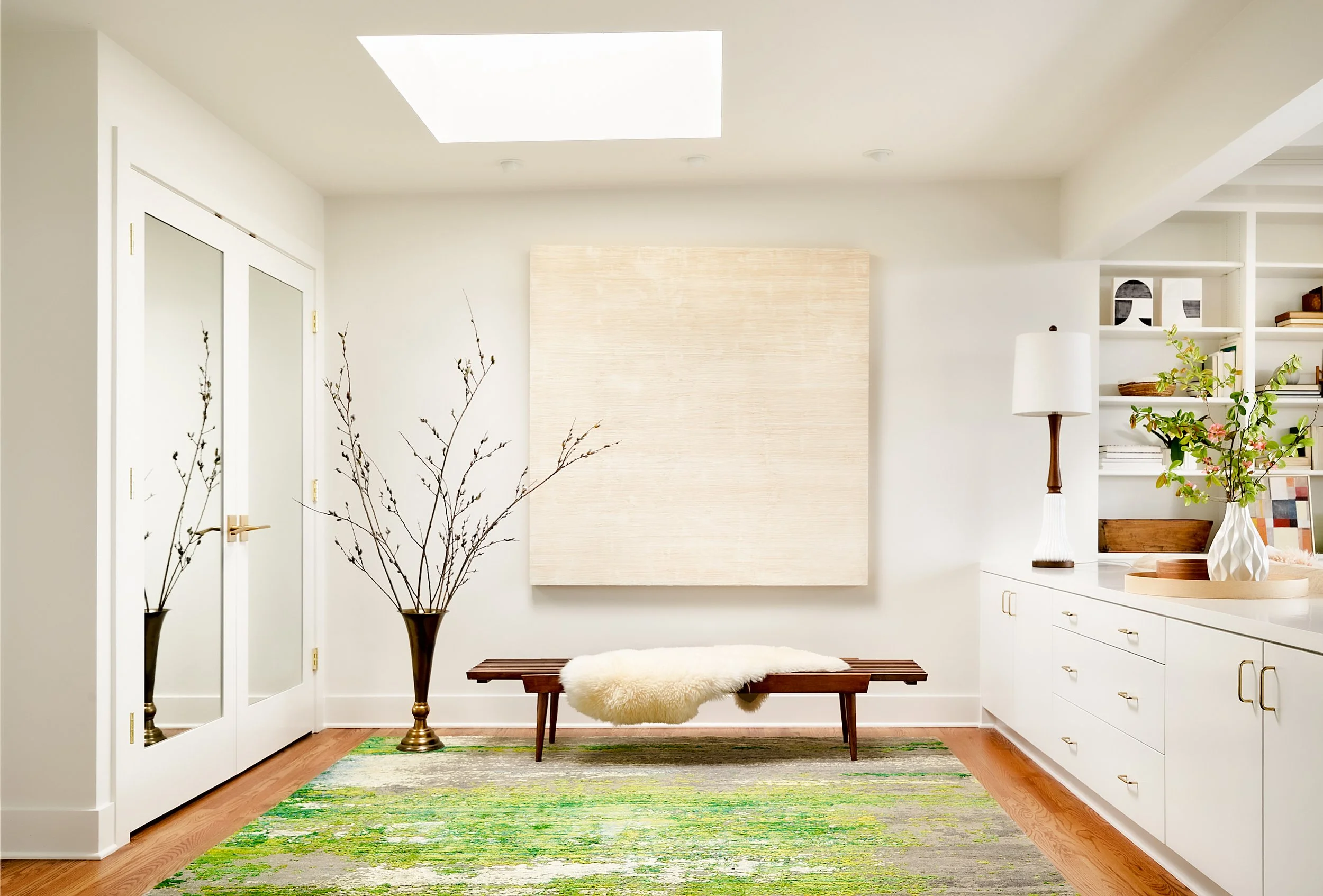
In Frame: Northwest Elegant Modern
That is what makes a rug worth building around. Not whether it matches perfectly. Not whether it behaves itself. Not whether it disappears politely into the background. The right rug tells the room what to say, and sometimes, if you let it, it tells the room what it wants to become.