
The Power of Sensory Design
Pretty is not the finish line. The rooms that hold you on hard days and light you up on good ones work on every sense you have. Sight matters, of course, but so do sound, touch, scent, scale, and the way light behaves hour by hour. That is the heart of wellness design and calming interiors, and it is why I think about wellness and home environment as one conversation.
What happens when a room looks right but feels wrong
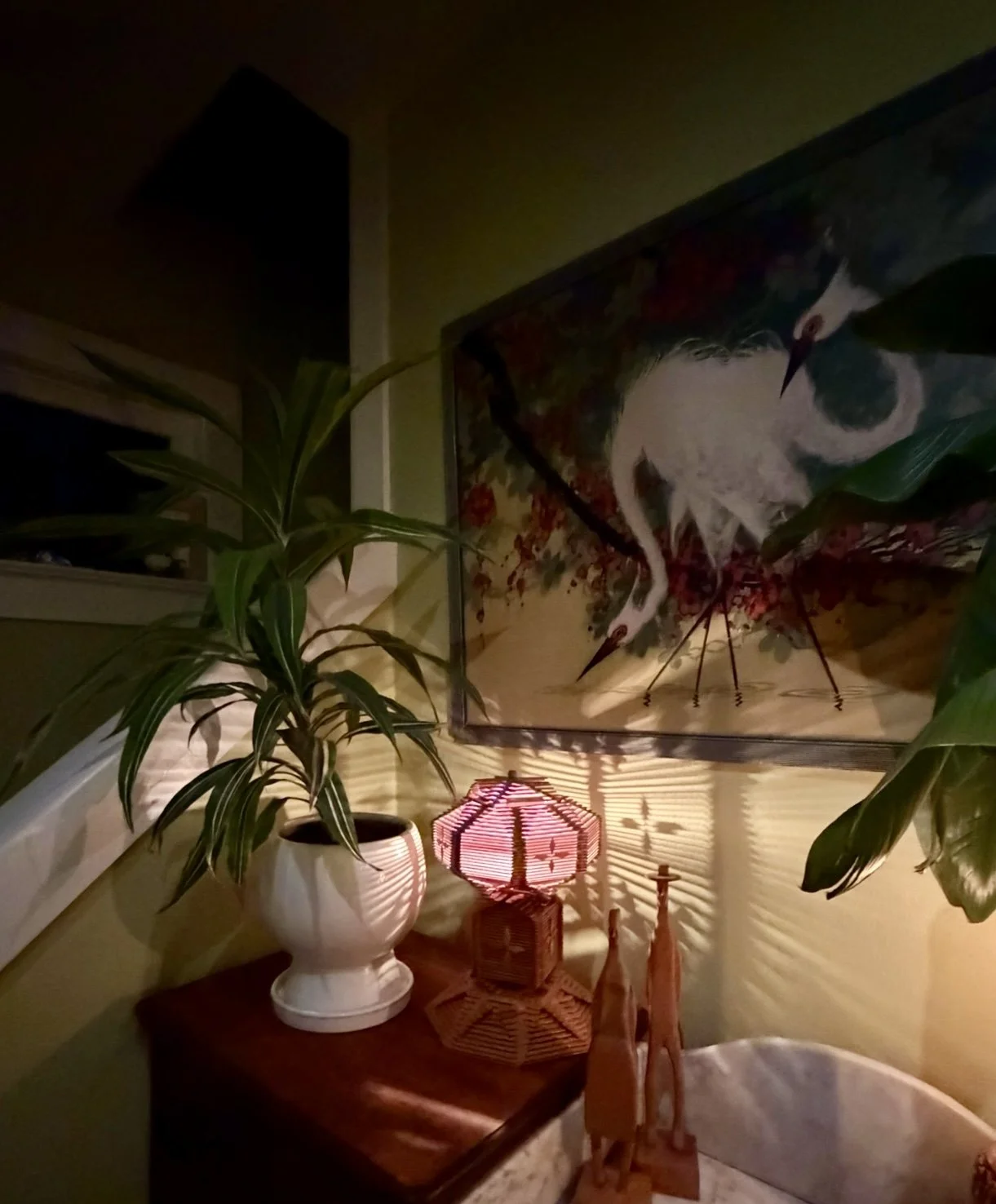
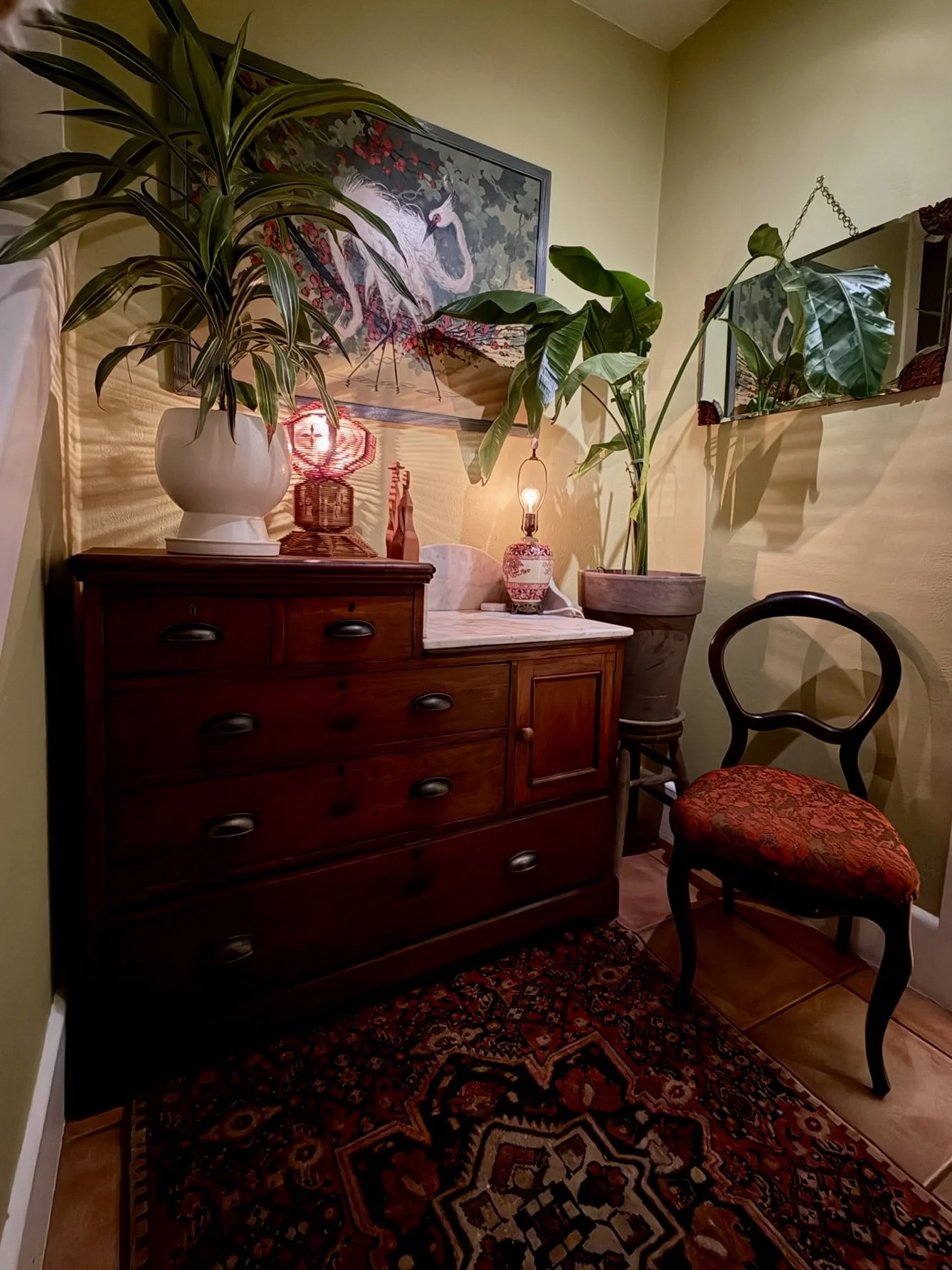
Recently at my own front door we solved a simple problem: where do the shoes go. The entry became very tidy very fast, and every time I opened the door I thought, this looks good and it feels wrong. It was too perfect. No place to sit. Lighting that did not greet you. Nothing that said who we are. I brought home a well-loved 1940s painting from my studio with all the right colors, swapped in vintage and reclaimed pieces, tuned the light, and let a little imperfection live. Instantly the room felt welcoming again. That is sensory design at work, not more stuff, better signals. If you prefer design choices that age well once your senses are considered, also read timeless over trends. It’s still not perfect, we have changed things even after this photo was taken, but it does feel more like us, and we are liking it more and more. Now for a new, way taller plant on the right-hand side!
Try this: a 10-minute entry reset
Add one pre-loved piece with character or handwork.
Give yourself a real landing spot for keys, bags, and shoes.
Warm the light and dim it a notch.
If the room still feels tense, it needs softness or scent, not another tray.
When I walk into a home, what do I notice first
Echo. If your voice bounces, your nervous system does too. Echo usually means too many hard surfaces and not enough soft ones. Rugs, curtains, upholstery, plants, books, even a fabric pinboard will absorb sound and make a room feel humane.
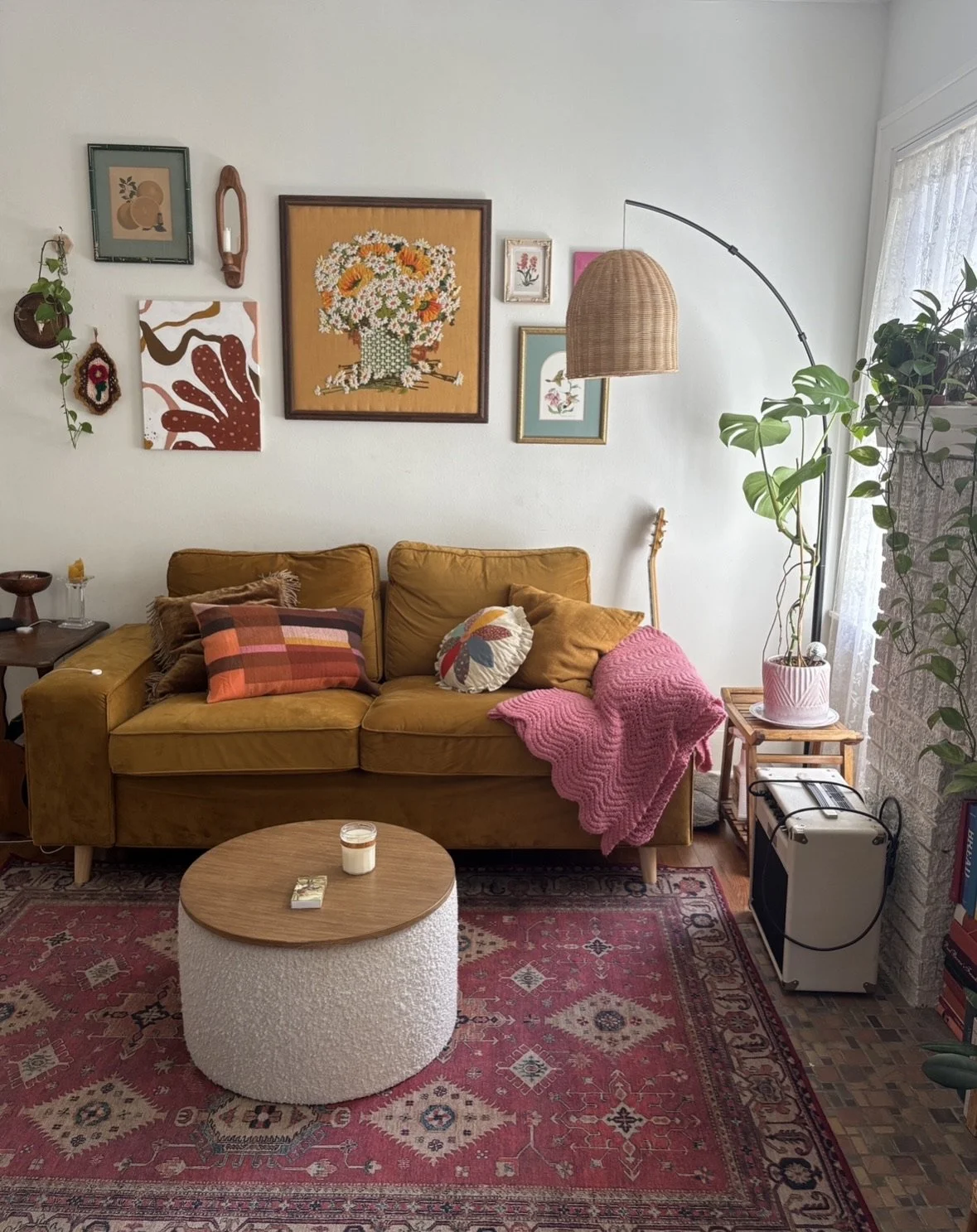
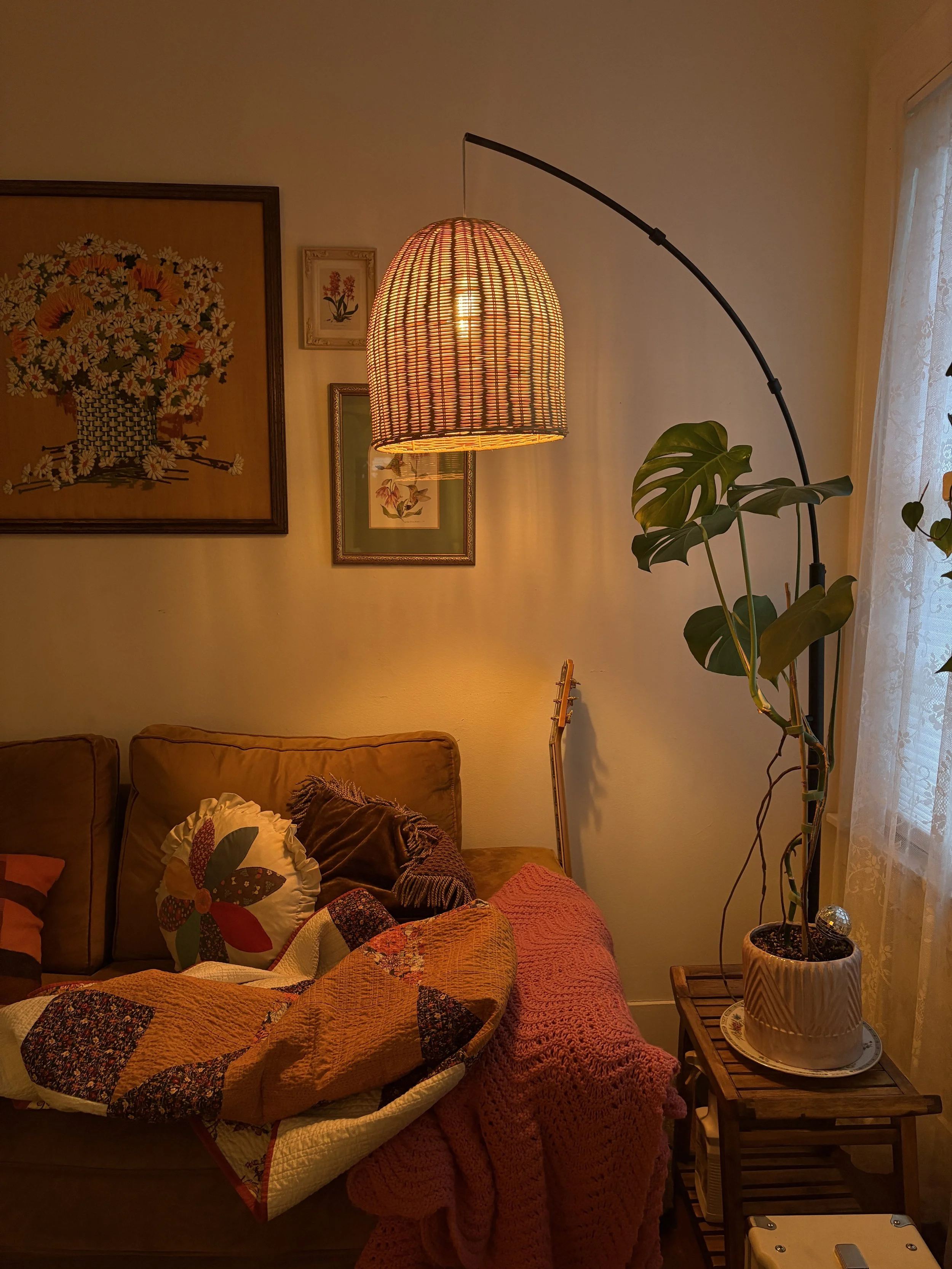
Chaotic lighting. Mixed bulb temperatures and glare are exhausting. Pick a warm target and stick with it. I aim for 2700K throughout a home, with dimming wherever possible. Then layer light like you layer texture: table and floor lamps for glow, sconces for eye-level warmth, and as little overhead as you can reasonably get away with.
Stale air and heavy scent. Many newer houses are sealed so tightly that they trap smells and moisture. Crack a window five to ten minutes a day, even in winter. If you enjoy candles, choose cleaner formulas and keep it to one scented candle at a time, then let fresh air do the rest.
If you are curious about the feeling side of design choices, this thread connects to what I wrote about homes that feel authentic.
My signature sensory move
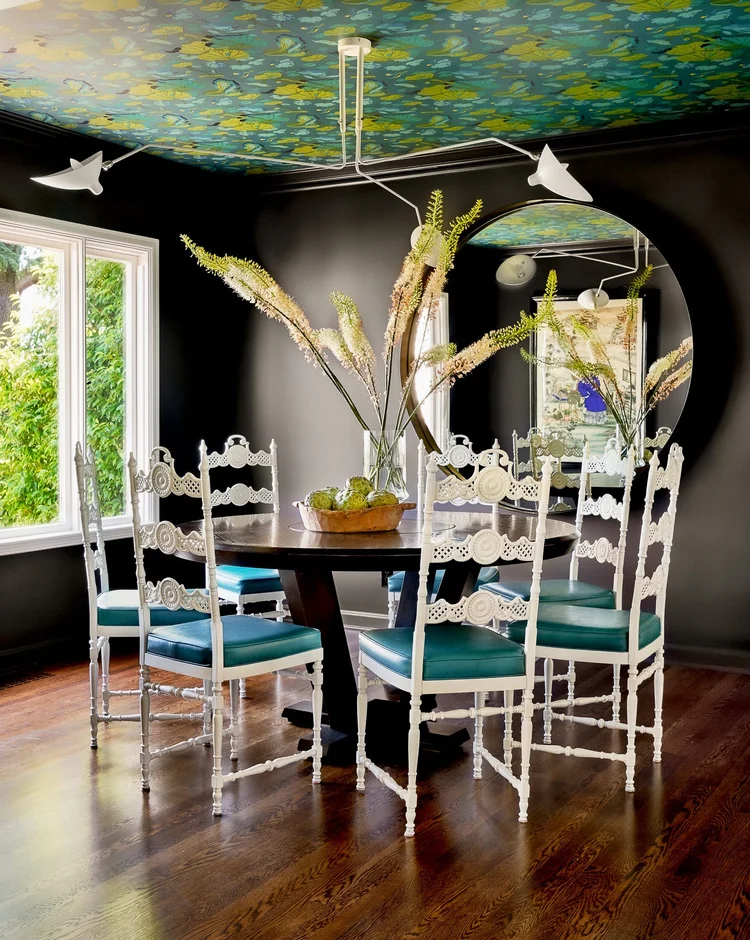
Mirrors and lamps, together, to move light. I use mirrors to bounce light from one room to another, to deepen an interior wall, or to quietly lift perceived height. A mirror tucked behind a lamp, at the back of a bookcase, or within a gallery wall does not read as “a mirror moment.” It reads as atmosphere.
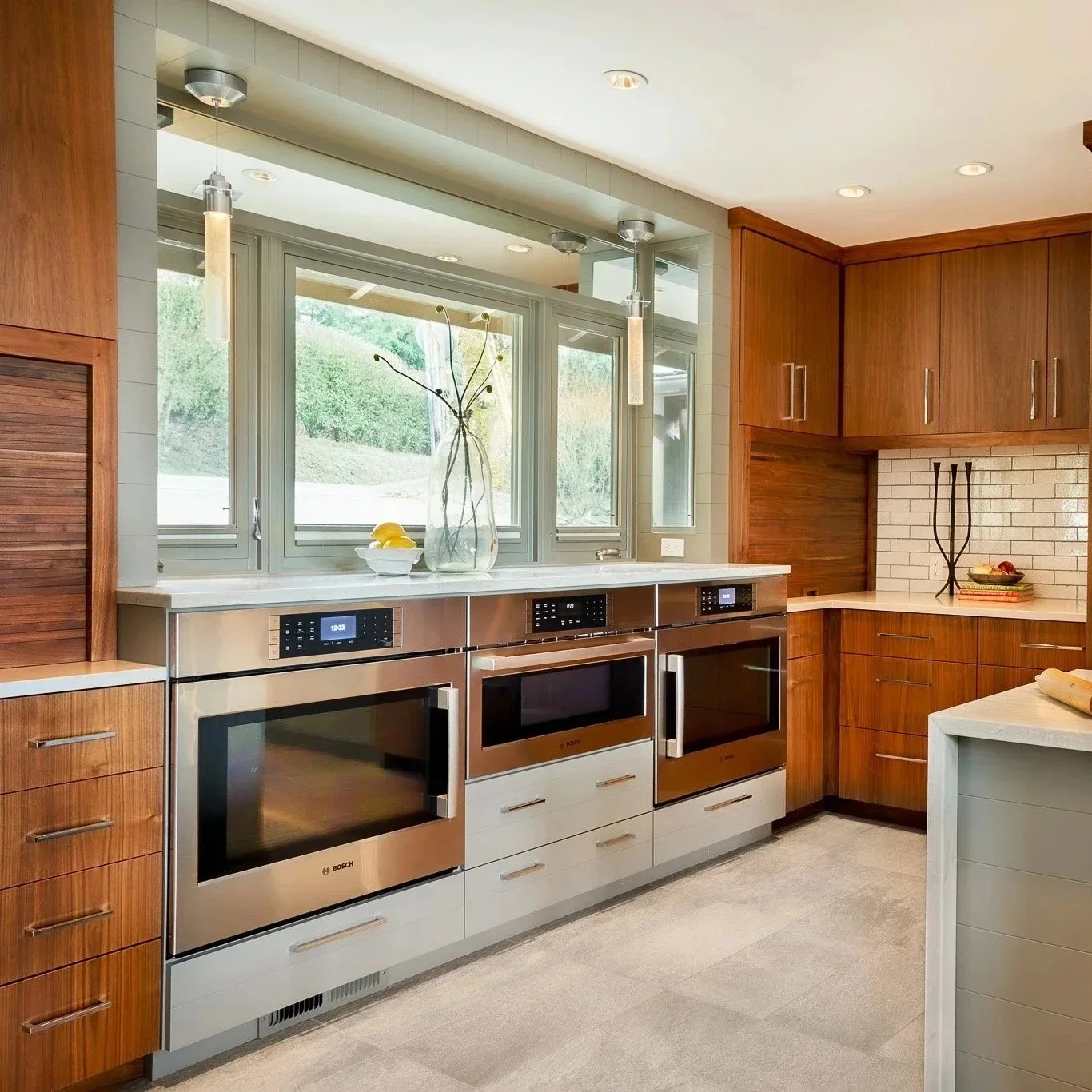
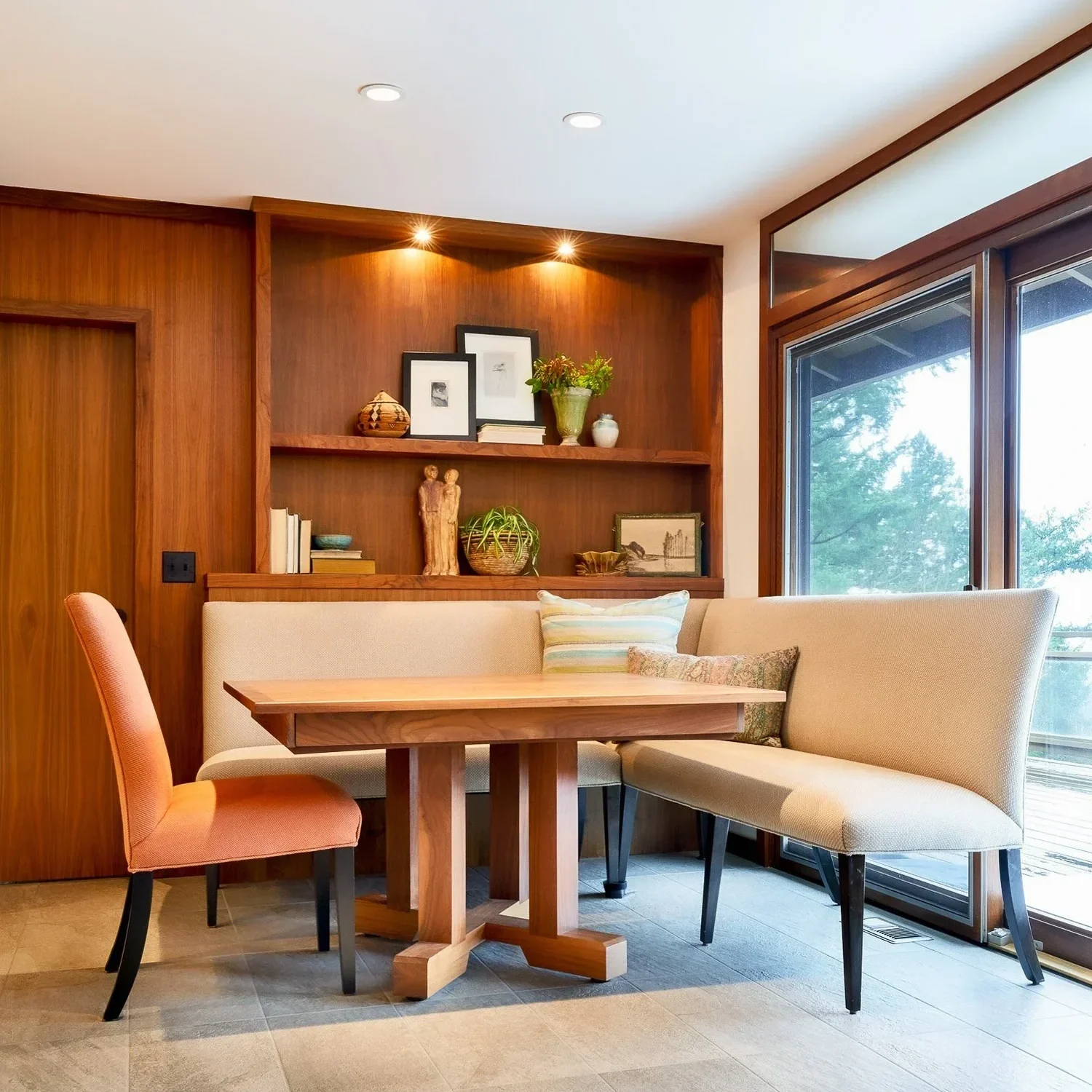
In the PNW Contemporary project, we used mirrors above windows as transoms to pull daylight deeper into the space. No one pointed to the mirrors. Everyone felt the clarity.
Where mirrors earn their keep
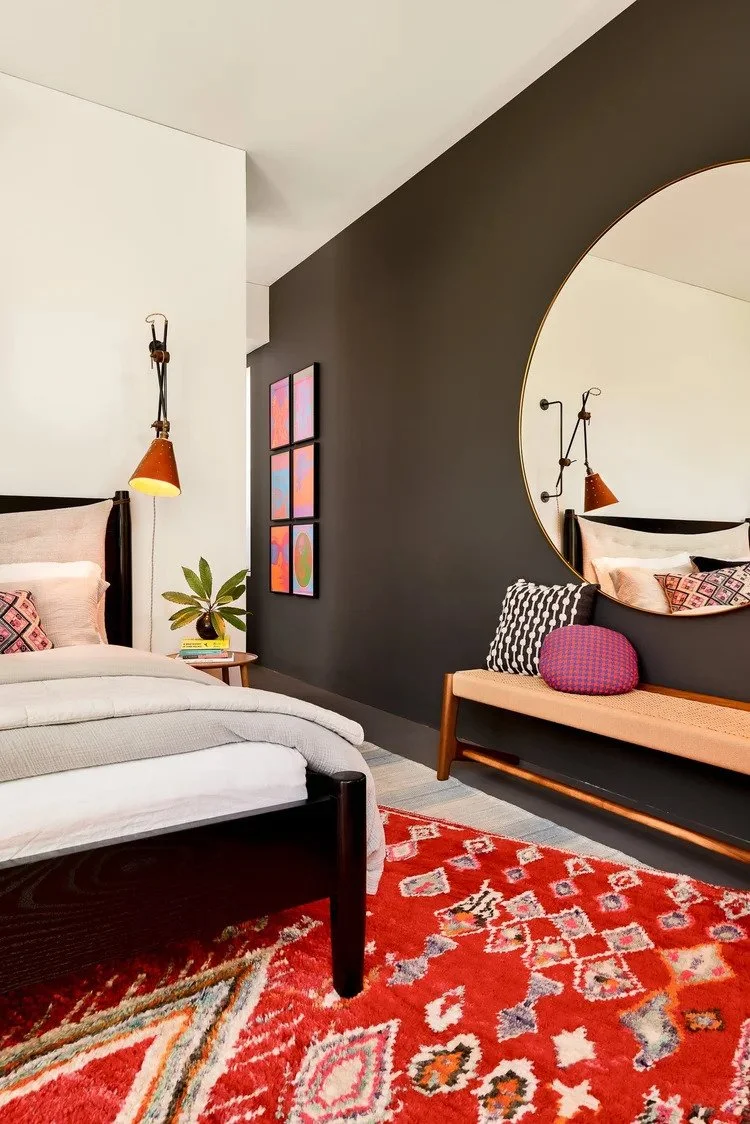
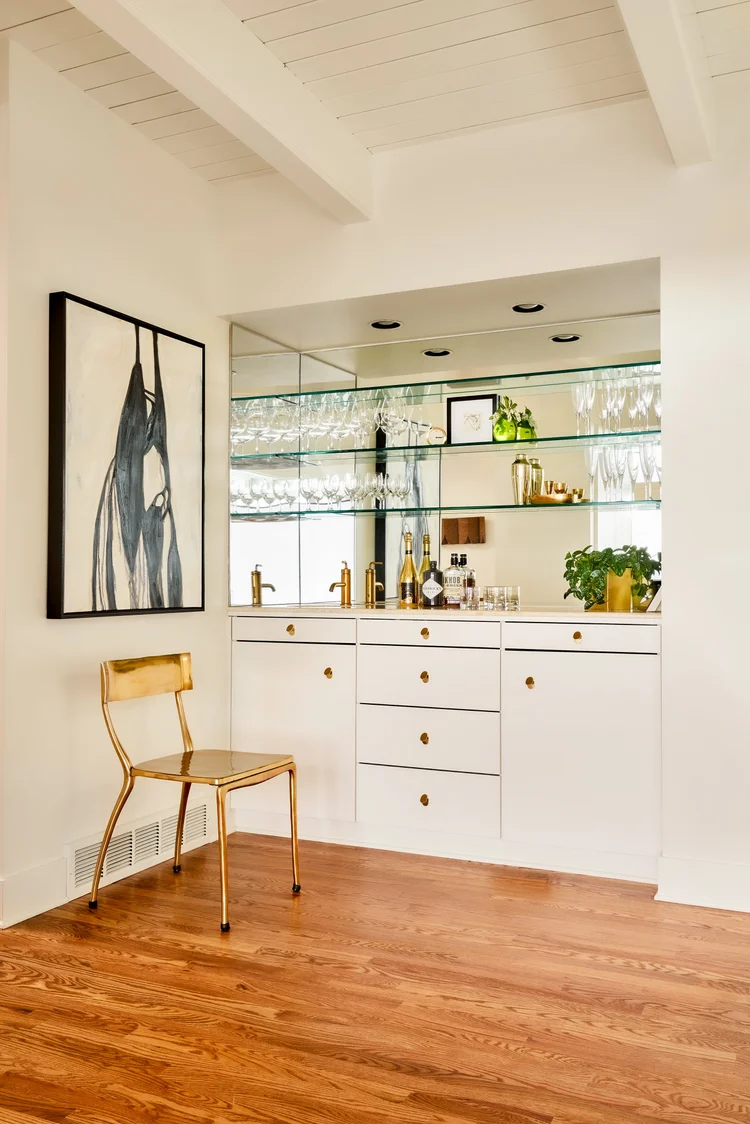
Small or interior rooms that borrow light from adjacent spaces
Long hallways that need rhythm and brightness
Dining rooms where candlelight can multiply without glare
Light that calms you
You do not need a ceiling full of cans to live well. In fact, the more you minimize overheads, the more control you have over mood. Keep color temperature consistent, put lamps on dimmers, and think about time of day. Morning can be brighter and crisper. Evening should slide toward warm, low, and layered. If you change nothing else this week, change three bulbs to 2700K and add one plug-in dimmer to your favorite lamp. You will feel it.
One “luxury feeling” you can create without spending more
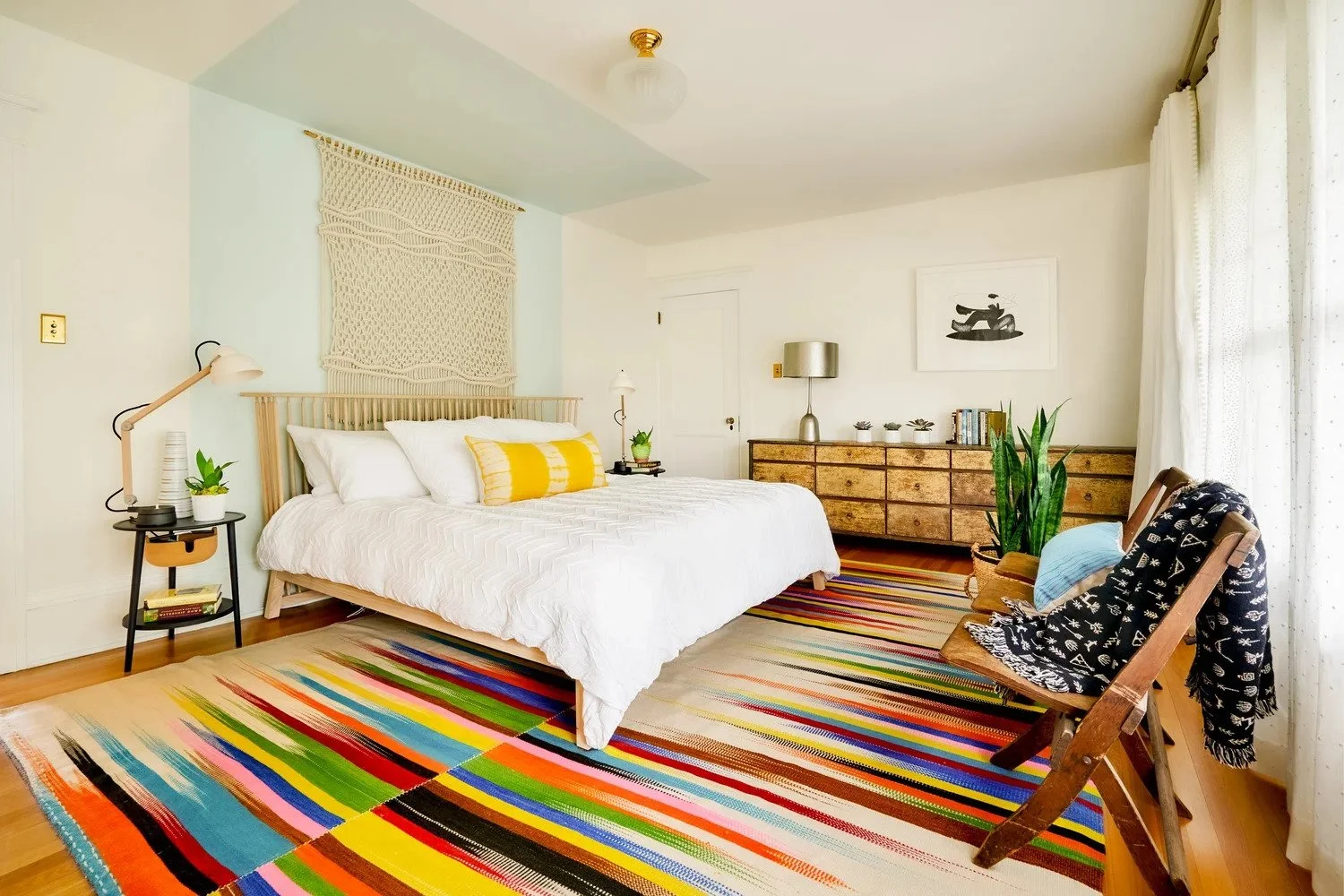
Texture. If you want a room to feel richer without remodeling, upgrade what your hands touch. Natural fibers with a good “hand” beat shiny synthetics every time. A wool-silk pillow, a heavy cotton velvet, a linen-blend throw, a nubby boucle on a small ottoman, a wool rug underfoot. I am especially soft on crewel work, that dense, hand-done embroidery that brings depth and history. Old wool blankets with that familiar blanket stitch make me just as happy. Handmade ages well, and patina is a form of kindness.
How I design for sound in real homes
Open plans are beautiful and loud. You can quiet them without sacrificing openness. Use area rugs to define zones. Add lined drapery or roman shades where bare windows bounce sound.
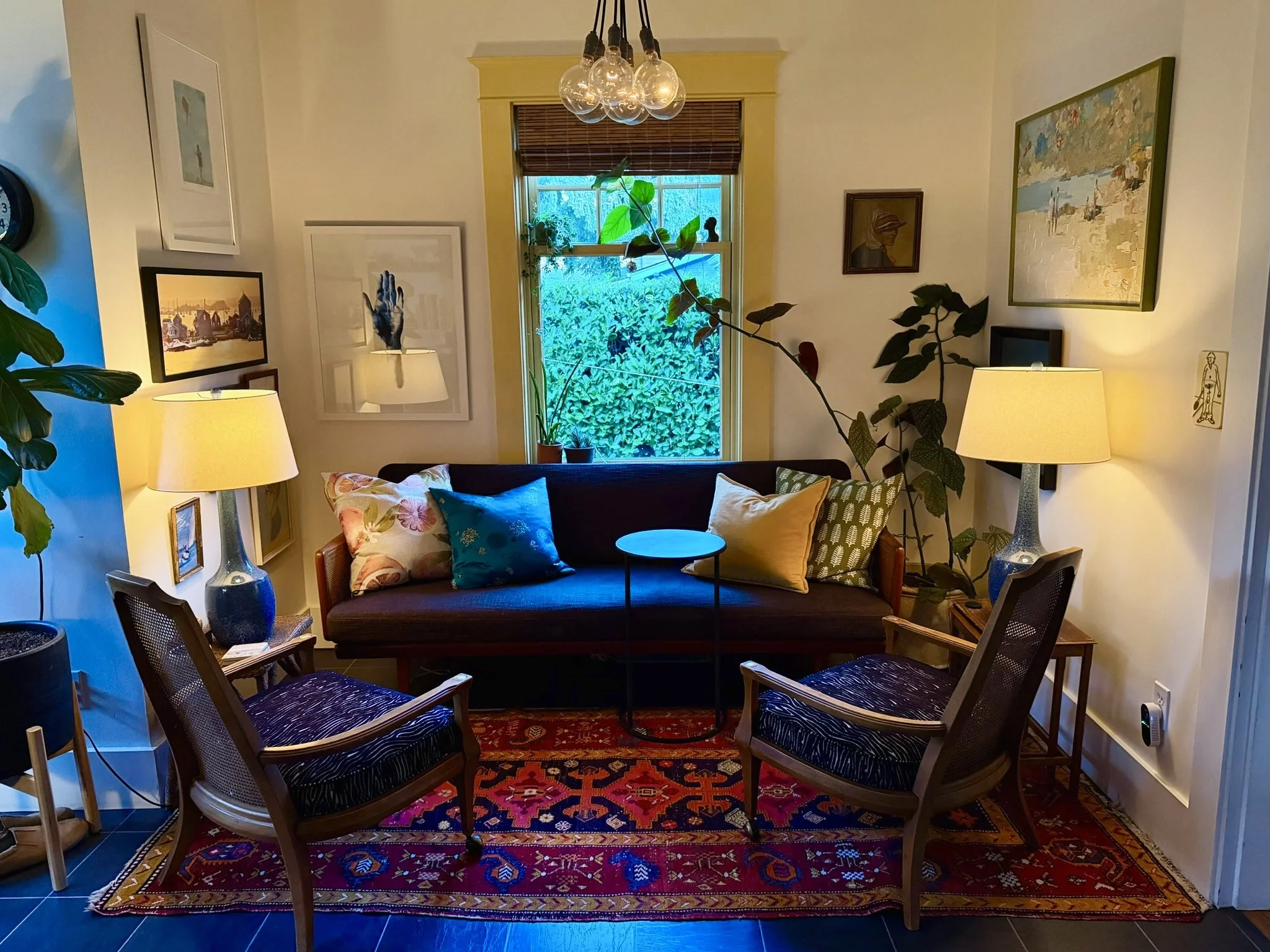
Bring in upholstered pieces with arms rather than all tight-back seats. Layer shelves with books and objects for diffuse absorption. Even in my tiny kitchen, a petite sofa, two chairs, and a rug change the way the room sounds.
What is my no-gimmick approach to scent and air
Ventilation first, then scent. Open windows daily, use your range hood when you cook, and keep soft goods genuinely clean. If candles relax you, light them, but choose better ingredients and do not rely on them to mask a sealed house. One scented candle plus some unscented ones is a lovely balance. On cold days, a simmer pot of cloves and citrus is simple and grounding.
How I uncover your sensory preferences
Some of it is conversation. Do you reach for lamps or overheads at night. Do you like a candle or does it give you a headache. Some of it is observation. Are your surfaces spare or layered. Do you keep windows bare or fully dressed. We also use questionnaires so your likes and dislikes make it into the plan. Then we test in real light and real life.
Small changes, one sense at a time
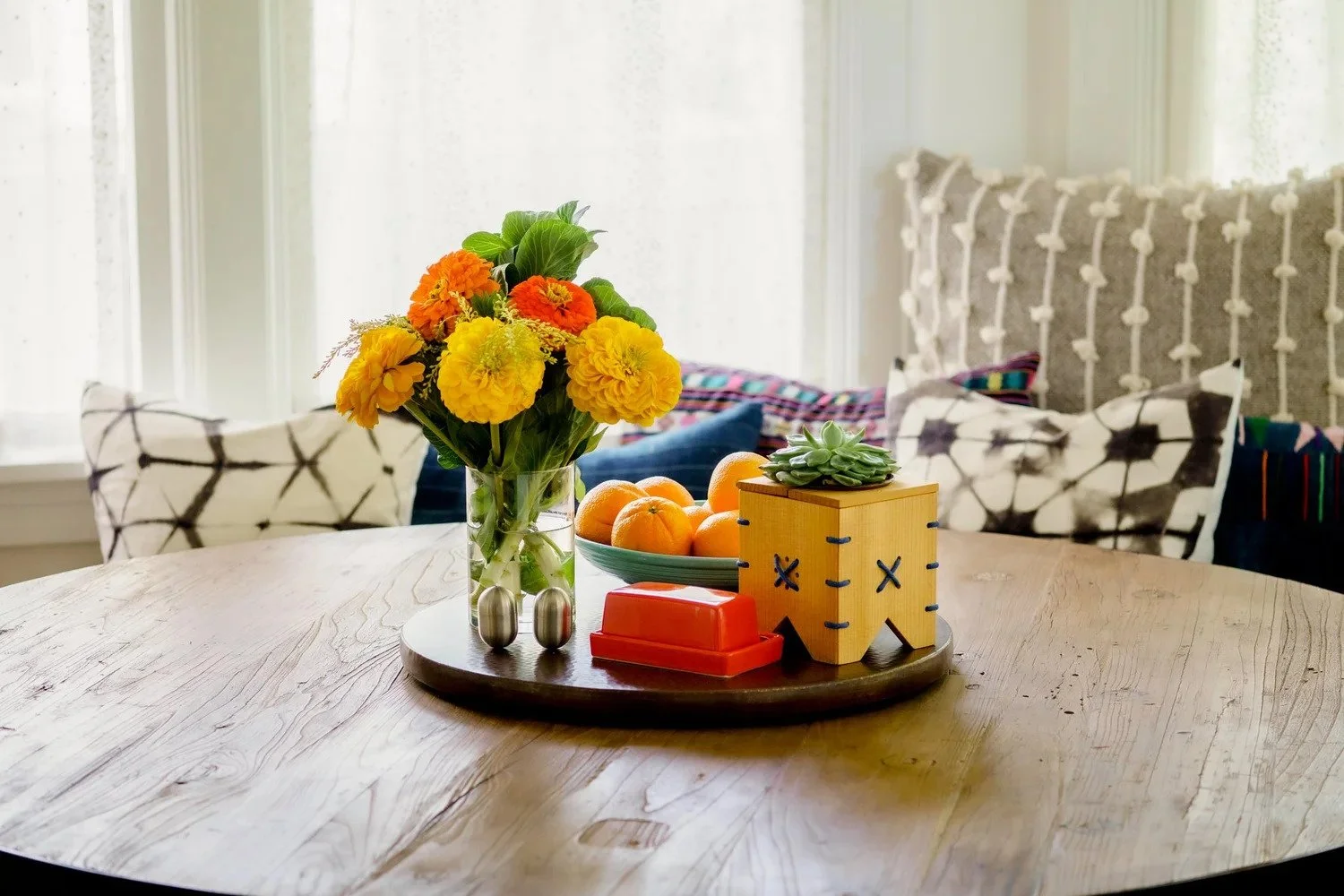
Sight: unify three frequently used bulbs to 2700K and add one plug-in dimmer.
Sound: add a rug or a pair of lined panels to the loudest room.
Touch: trade one synthetic throw for a natural fiber you love to handle.
Scent/Air: crack a window daily and simmer orange peel with cloves once a week.
Scale: lower the visual ceiling with eye-level light and art hung at human height.
How this shows up in behavior
Clients often tell me that after we finish, they start using rooms they previously avoided. That is the metric I care about. When a chair finally has the right lamp, the right table for a mug, the right angle to the view, and the sound is softened, you choose that spot. When morning light hits linen in a way that makes you breathe easier, you choose that spot for coffee. Sensory design changes what you do, not just what you see. It is the same reason I write about design as care in itself; the ideas in this piece sit alongside interior design is self-care and spaces that feel deeply you.
Good rooms are kind rooms. They quiet the echo, soften the light, welcome your hands, and smell like fresh air and a life being lived. That is the power of sensory design, and it is why interior design has never been only about what you see.