
A Look Back at What Shaped My Creative Life
There are things I am drawn to now that, when I really stop and look, have been with me all along.
Recently, my little sister and I were in Tennessee looking through old family photos from the early 70s, when I was just a little girl. We were living on Guam then, and the colors in those photographs stopped me. Even the cool colors had warmth to them. There was the tropical setting, of course, but also just the way color lived in that era. It all felt sunwashed and alive.
(Sorry for the poor quality, this was an old slide. It may not be magical to you, but it’s pure magic to me, poor photo quality or not.)
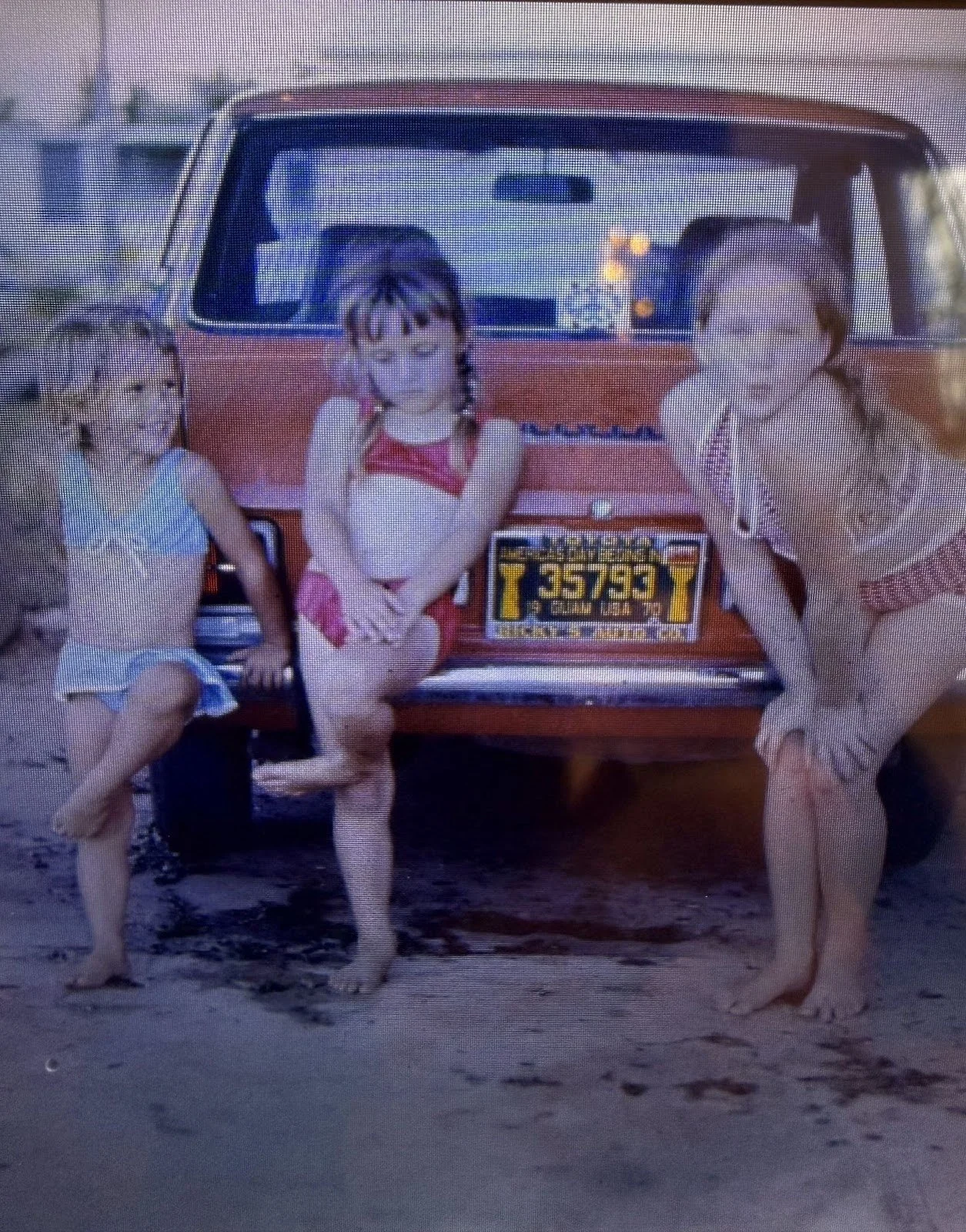
(Sorry for the poor quality, this was an old slide. It may not be magical to you, but it’s pure magic to me, poor photo quality or not.)
And I realized, those are still my colors.
Warm raspberry reds. Watery turquoise-y blues. Fresh, grounded greens. Sandier, warmer tones. Yellows that carry all of those colors with them. They are everywhere in my house, whether I mean for them to be or not. I cannot not have them around me. That was such a funny and clarifying thing to notice, that this thing I thought of as preference is really something much older and deeper. It has just been living with me all this time.
The Girl Who Wanted To Go Inside
When I think back on the first spaces that really got to me, it was never about some grand design revelation. It was much quieter than that. I was always the kid who wanted to go inside the house.
We would go visit people and eventually the other kids would be outside doing whatever kids do, and I would get there too, but first I wanted to poke around the house. I wanted to see the rooms. I wanted to understand what they felt like. I wanted to stay in them a little longer than necessary.
My grandmother’s houses really marked me. She and my grandpa moved around quite a bit, and they would fix up their houses as they went. Sometimes they were these wonderful old ranch houses. My grandpa was a ranch hand for a while, and there were just certain homes from that part of my life that imprinted on me in a way I still feel.
I remember the dark wood tongue and groove with pink chiffon curtains. I remember how feminine her style felt. I remember being completely mesmerized by beautiful bedding in somebody’s guest room, or by the way someone had arranged a bedroom, or by wanting to wake up in a room and just lie there looking around at it. I would run my hands over things. I wanted to understand why certain spaces felt the way they did.
There was a room in Italy that I stayed in that is still with me. I loved every elegant, aged, imperfect, storied, impossible to replicate thing about this room. Here is one of the million or so pictures I took of it:
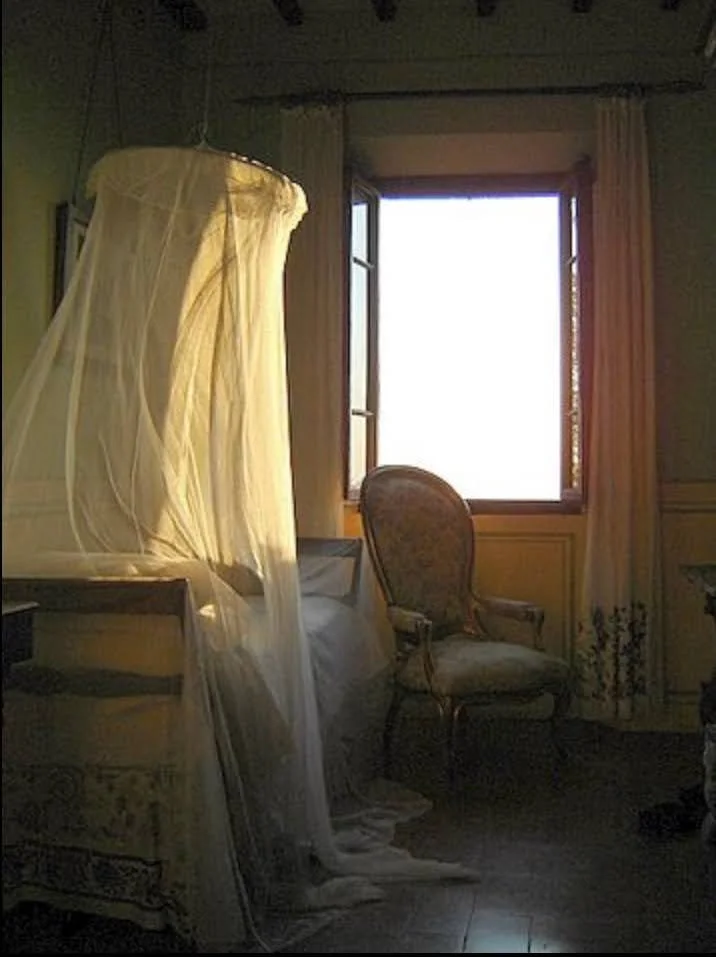
It was not one room or one object. It was an accumulation. A slow layering of impressions. And I think that is still how I work, honestly. I gather things. I hold onto them. They pile up. Then they come back out later in some new form.
Learning Fast, Trusting My Gut
My first real entry into design was visual merchandising, and that absolutely set the foundation.
That is where I learned to trust my gut. That is where I learned how to please the crowd without losing the story. It is where I understood, very early, how fashion and interiors speak to each other. I was dressing mannequins, so I was reading Vogue. I was also working in the home department, making beds and setting tables and dressing those spaces, so I was reading shelter magazines too. I was living in both worlds at once all the time. And that was incredibly useful.
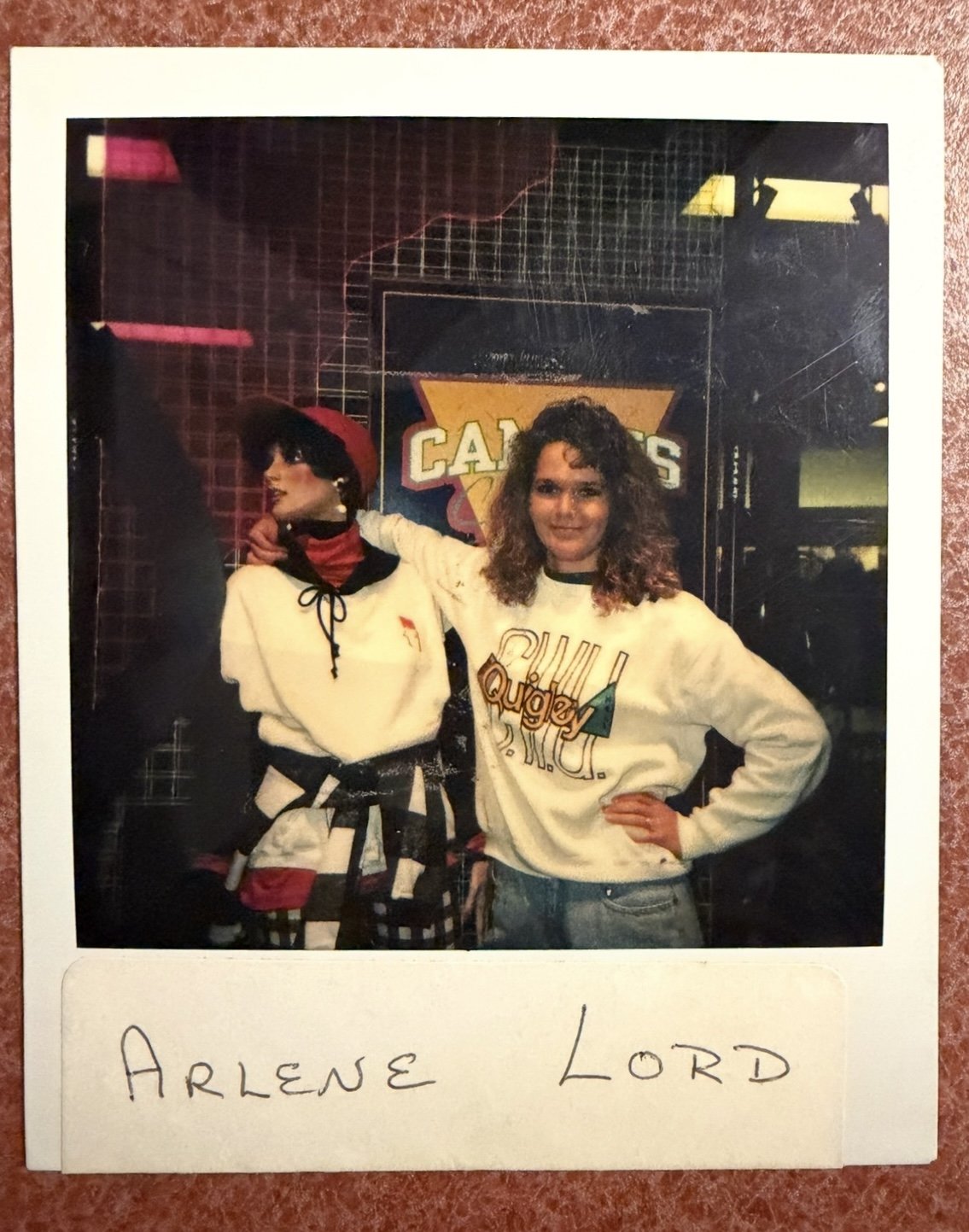
You get very good, very fast, at making something feel right. You learn how to pull a story together on instinct. You learn how to think on your feet. You learn how to create something polished and beautiful with very limited resources. That chapter taught me a lot about scale, rhythm, and how people move through a space. It taught me how much atmosphere matters. It also taught me how to make something feel elevated without leaning on excess.
I loved that world. I really did. And I likely would have stayed in it longer if it had continued to offer the same room for creativity and growth. But over time it became more standardized, more controlled, and less creatively free. Once that happened, I knew I needed to find another way to work.
Finding My Way Into Interiors
Even while I was merchandising, I was always decorating on the side. I was doing weddings too, with my friend Kandis, who was my mentor and still one of my dearest people. She had started doing people’s homes, and I kept finding myself pulled back toward interiors because I needed something more personal, more layered, more human.
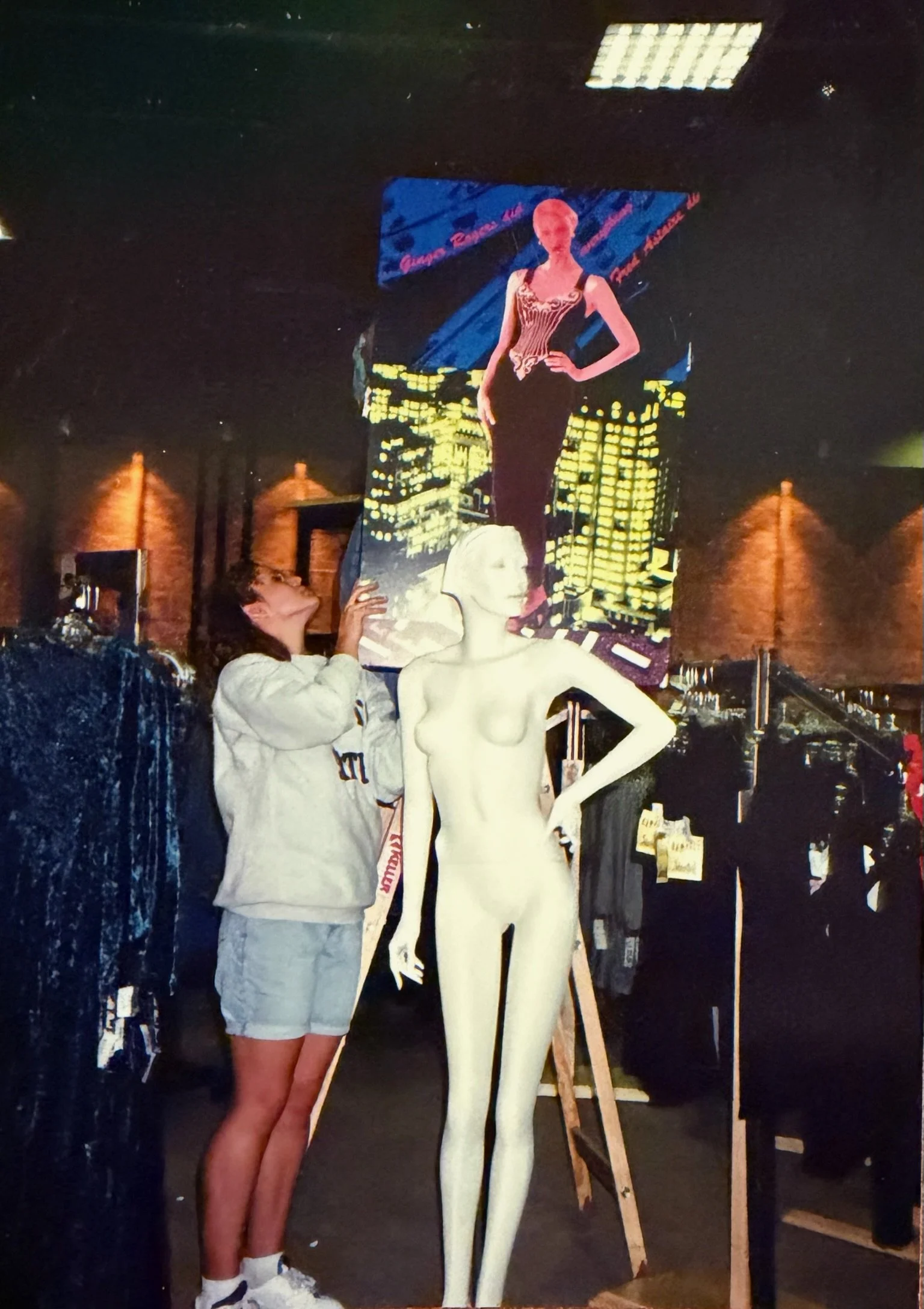
(Clearly I don’t have any pictures of me doing display work beyond 1991 but you get the gist!)
It was not some dramatic leap. It was more like I kept being pulled in the same direction until I finally admitted that was where I belonged.
I never had a moment where I thought, this is the career I was destined for. It was not that clean. It just kept happening. I kept making my way toward homes, toward objects, toward atmosphere, toward helping people live in beauty in a way that actually supported them.
Lord Design Was Not Just A Dream
Starting Lord Design in 2010 was not some polished entrepreneurial fantasy. It was a necessity.
I needed to make money, and this was the way I knew how to do it. But I was also deeply ready to do it on my own terms, and that part felt exciting. Terrifying too, of course, but exciting.
From the beginning, I knew I wanted Lord Design to be a very holistic interior design firm. I wanted decorating to matter just as much as the remodel. That was non-negotiable for me. So often the decorative layer gets treated like the bonus round, and then by the time a renovation is done, people are exhausted or out of money or both, and the whole thing gets left incomplete. That always felt wrong to me.
I wanted clients to get the vision.
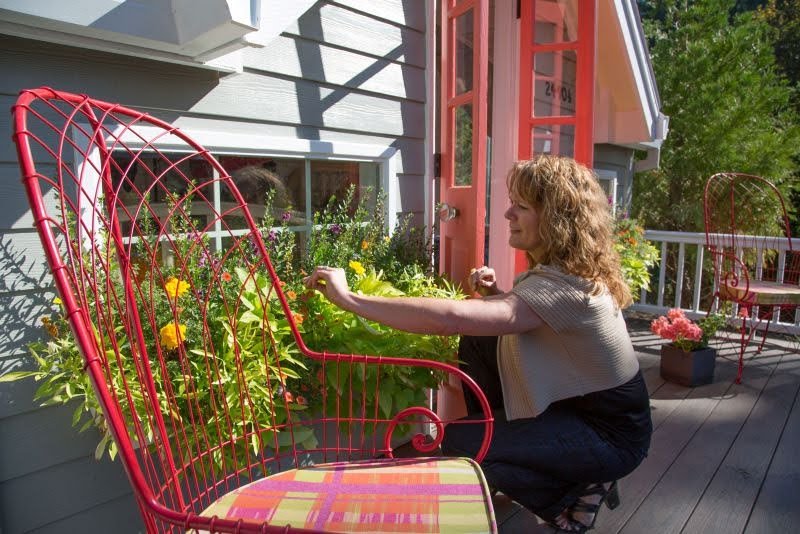
I wanted them to understand the cost up front. I wanted the whole thing considered from the beginning. I wanted the decorating to be as valued as the design-build side, because to me, it is all the same story. I wanted it all in one package, all considered, all cared for. And I wanted to work with the best builders and tradespeople in town to make that happen.
That instinct to care about every little detail, all the way down to the switch plate or the final lamp, came from knowing how easily details get forgotten on the build side. Those small things are not small. They change how the whole thing feels in the end. I did not want clients chasing details after the fact. I wanted them to walk in and feel the dream they had paid for. I wanted it to feel complete. I wanted it to look like the drawing, and then later, like the 3D rendering, and then finally, like itself, only real and done and alive.
That was always the goal.
When The Vision Started Holding
The real game changers were those first few whole-house remodels and decorating jobs where we were trusted with the entire vision, and then it all came together the way we had hoped it would.
That was the moment it really settled in for me. Yes, this thing I see in my head can actually happen. Yes, we can take something difficult, awkward, tired, or forgotten and turn it into something beautiful and coherent and alive. Yes, people will feel it too. That was invigorating.
It is one thing to have good instincts. It is another thing to watch a whole house receive them well.
The Old Things Were Always Coming With Me
I have always loved antiques and vintage. Always.
That was never something I acquired later. But when I first got into this business out here on the West Coast, with the clients I was working with at the time, older things were not always immediately welcomed. People wanted shiny and new. So I had to sneak them in. The funny thing is, people always liked them once they were there. They just were not always asking for them yet.
There were a few clients who really changed my confidence around that. They had cool things. Real things. They loved antiques. One in particular, Peggy Cvach, would say, “You need your own store. I love your stuff.” And that kind of encouragement stays with you.
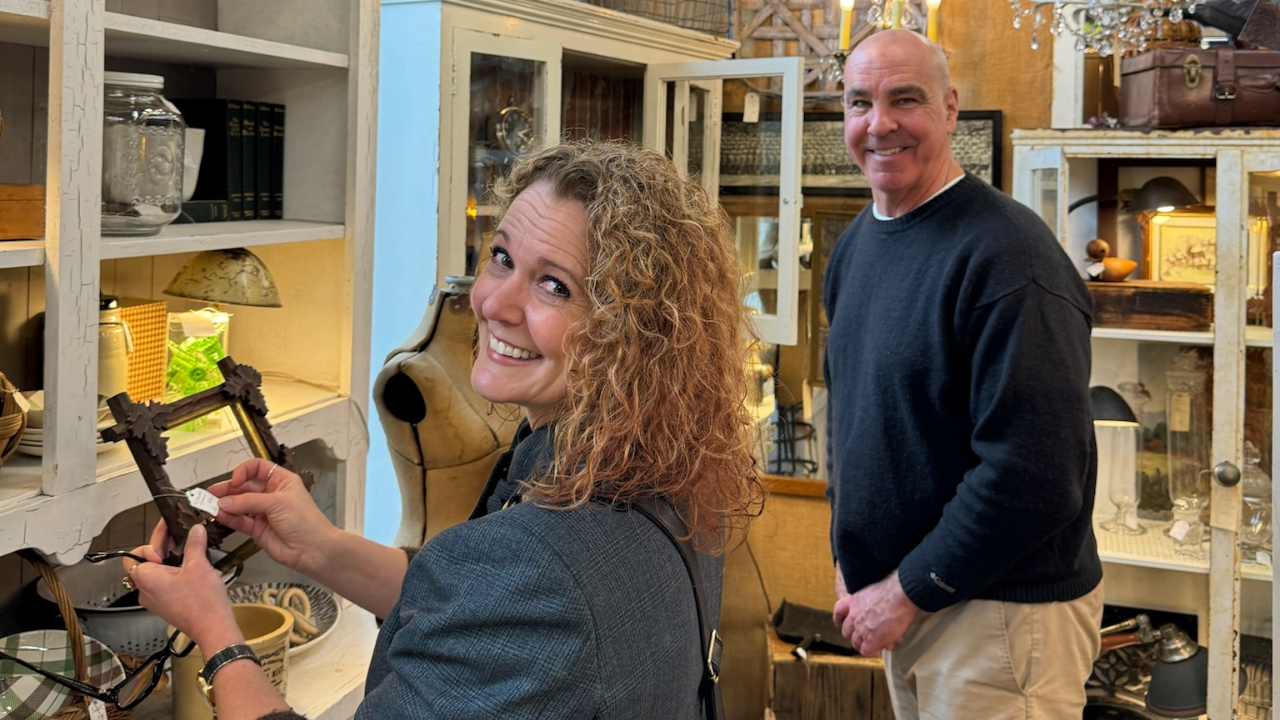
Whenever Jeff and I would go back East and find things and bring them home, she wanted to see all of it. That was meaningful. It made me trust my own point of view more. It made me lean in harder to the layered, storied, collected side of design that had always been there in me anyway.
And over time, my clients opened up to it more and more.
That, to me, is one of the great joys of this work. Not just designing rooms, but helping people fall in love with pieces that carry time, patina, strangeness, memory, and soul. That part of me has always been there, and I suspect it will keep growing.
What I Would Tell My Younger Self Now
Recently I cut a word out of a magazine and kept it: rewilding. That is what I would tell younger Arlene. Never lose that. Stay a little wild.
Never lose the instinct to try something, to explore something, to follow the thing that feels alive before anyone has told you whether it is smart or marketable or correct. I look back on some of the work I did in my earlier years, before I “knew better,” and there was a kind of freedom in it. Somewhere along the way, some of that got scared out of me. I got more careful in ways that maybe were not always useful.
And I think I could have done some really interesting things had I stayed a little wilder. So that is what I would say now: do not operate from scarcity or fear. Stay wild. Keep creating. Do not let people scare you out of your zone of genius.
Stay in it.